
the best grout color for showers: a designer’s guide
by clé tile | published: Apr 30, 2026

modern farmhouse brick 2½" x 9½" in matte white. design: alexandra silverman studio / photo: erin scott studio
grout color is one of the most consequential — and most underestimated — finishing decisions you’ll make when planning a new shower. with standard tile, grout can feel like a background detail. but when you’re working with artisan materials, in particular, grout becomes part of the composition itself. it frames each tile, connects the surface, and quietly shapes how the entire installation reads.
in other words, grout isn’t just functional. it’s visual. it’s structural. and in a shower, where surfaces are up close and constantly interacting with light and water, it plays an even more defining role than you might expect.
why grout color matters more than you think
step back and look at any tiled surface, and what you’re really seeing is a grid. grout lines create that grid, and that grid influences everything — the rhythm, the scale, even the mood of a shower. this is the power of grout. it can soften a pattern, sharpen it, or completely transform how the tile itself is perceived.
with handcrafted materials, this phenomenon becomes even more apparent. tiles like zellige and encaustic cement aren’t perfectly uniform — their variation is the point. grout settles into the joints and interacts with those subtle irregularities, either highlighting them or quieting them. compared to uniform porcelain, where grout plays a more predictable role, artisan tile asks you to be more intentional.
in other words: grout, when done well, can create a shower that feels layered, nuanced, and fully resolved.


modern farmhouse brick 2½" x 9½" in deep blue gloss. design: elliott build / photo: brian mccloud
the core choice: match, blend, or contrast
before getting into specific materials and tones, it helps to think about grout color in terms of three core strategies: match, blend, or contrast. each approach creates a different visual effect, and none is inherently better — it’s about what you want the finished space to communicate.
matching grout for a seamless, immersive look
when grout closely matches the tile, the surface reads as one cohesive plane. grout lines visually recede, allowing the material itself to take center stage. this is especially effective with expressive surfaces like zellige, encaustic cement, and large-format natural stone, where texture, glaze, or pattern carries the design.
this approach can be the perfect choice when you want the shower to feel calm and immersive. the eye isn’t interrupted by a grid, so the overall effect is more fluid. it’s also an excellent choice for highlighting subtle tonal variation within handcrafted tiles, where matching undertones helps everything feel intentional rather than busy.
blending grout for subtle definition
blending grout — that is, choosing a tone slightly lighter or darker than the tile — is a designer favorite for a reason. it offers just enough contrast to define the grout lines without overwhelming the surface. the grid is visible, but it doesn’t compete with the tile.
this is a solid choice for layouts like herringbone or offset brick, where the pattern itself is part of the design. it’s also a best choice for neutral, earthy palettes, which are often found in spa-inspired showers. by staying within the same tonal family and matching undertones, you create a sense of cohesion while still giving the installation structure.
contrasting grout for graphic impact
contrasting grout turns grout lines into a deliberate design feature. classic examples include charcoal grout with white tile or light grout with dark blue tile. this approach emphasizes geometry and can feel bold, graphic, and highly intentional.
however, it requires restraint. with smaller tiles — especially mosaics or zellige — high contrast can quickly become visually busy. it can also draw attention to the joints between sheets in mosaic installations, which isn’t always desirable. while it can be a perfect choice in the right context, it’s one to approach thoughtfully, especially in wet environments where visual calm matters.

shower wall: clé zellige 4x4" in weathered white; floor: le sol star + cross bundle in terracotta. design: audrey scheck design / photo: karissa widder

cement: solid 2x8" in basil. design: ashley haley / photo: kate longley
best grout colors by tile type
once you’ve chosen your overall approach, the next step is to consider how grout interacts with specific materials. different types of tile respond differently to grout color due to their texture, variation, and finish. the same grout color can look entirely different depending on the tile it’s paired with.
below are a few guidelines to help you choose the best grout color for a shower, based on the tile you’re using.
white and cream handcrafted tile
white and cream tiles are timeless, but they come with a surprisingly complex grout decision. white grout creates a crisp, continuous look, especially with classic formats like subway tile. however, in a shower, it’s also the most high-maintenance option. it tends to show discoloration, soap residue, and mold more easily, even with proper sealing.
a light to mid-gray grout is often the designer-preferred alternative. it provides subtle contrast, improves mold resistance visually, and is far more forgiving over time. for many homeowners, this becomes the best grout color for white tile — especially in a white tile shower where longevity matters as much as aesthetics.
zellige tile
zellige is inherently dynamic. its glazed surface reflects light in shifting ways, and its edges are intentionally irregular. because of this, grout color needs to feel like a natural extension of the material.
warm neutrals — sand, putty, or soft taupe, for example — are often an excellent choice. they echo the earthy origins of the tile and allow the glaze to remain the focal point. darker grout colors like charcoal or espresso can create drama, but they may compete with the tile’s natural shimmer.
bright white grout is generally not recommended here. it can exaggerate the variation in joints and make the surface feel less cohesive. with zellige, subtlety tends to yield the most beautiful results.
encaustic cement tile
encaustic cement tiles are all about pattern. whether geometric or floral, the design is the star — and grout should support it rather than interrupt it.
the best approach is to choose a grout color that closely matches the tile’s background tone. this allows the pattern to read clearly without fragmentation. contrasting grout, while tempting, often breaks up the design and creates visual noise.
dark and richly toned tile
dark tiles — like charcoal, navy, deep green, or espresso tiles — offer an opportunity for a more dramatic shower design. one approach is to match the grout to the deepest tone in the tile, creating a moody, enveloping effect. this can feel sophisticated and calming, especially in larger showers.
a contrasting light grout can work, but only when the grid is meant to be part of the design. otherwise, it can feel stark and overly graphic. as with all decisions, matching undertones is key. even within dark palettes, subtle shifts in warmth or coolness can make a big difference in the final result.

shower walls vs. shower floor: does the strategy change?
one detail that often gets overlooked is how grout strategy can differ between shower walls and shower floors. while consistency is important, function plays a bigger role on the floor.
shower walls typically prioritize aesthetics. here, grout color should harmonize with the tile and support the overall design intent. on the floor, however, practicality becomes more important. floors see more wear, more water exposure, and more visible residue from soap and minerals.
mid-tone grout colors are often the best grout color for shower floors because they strike a balance. they don’t show staining as easily as white, but they don’t highlight buildup the way very dark grout can. if you’re using the same tile throughout, consider using the same grout for continuity or going slightly darker on the floor for durability. it’s a small shift that can make a meaningful difference over time.
grout color and maintenance realities
we need to be honest here: grout maintenance is real. and in a shower, it’s unavoidable. choosing the right color can make that reality easier to manage.
white grout, while beautiful, is the most demanding. it can discolor over time, especially in wet environments. even with sealing, it requires regular upkeep to maintain its original appearance. darker grout offers more forgiveness, but it can sometimes highlight inconsistencies in the tile or installation.
mid-tone grays and warm neutrals tend to be the most practical. they mask minor discoloration while still looking fresh. when grouting artisan tile, this becomes even more important, as wider or irregular joints can make grout more visually prominent.
regardless of color, proper sealing is essential. it enhances mold resistance and helps protect the grout from moisture and staining. in a shower, this isn’t optional — it’s part of ensuring your installation remains beautiful over time.

modern farmhouse brick 2½" x 9½" in matte white. design / photo: anna kidd
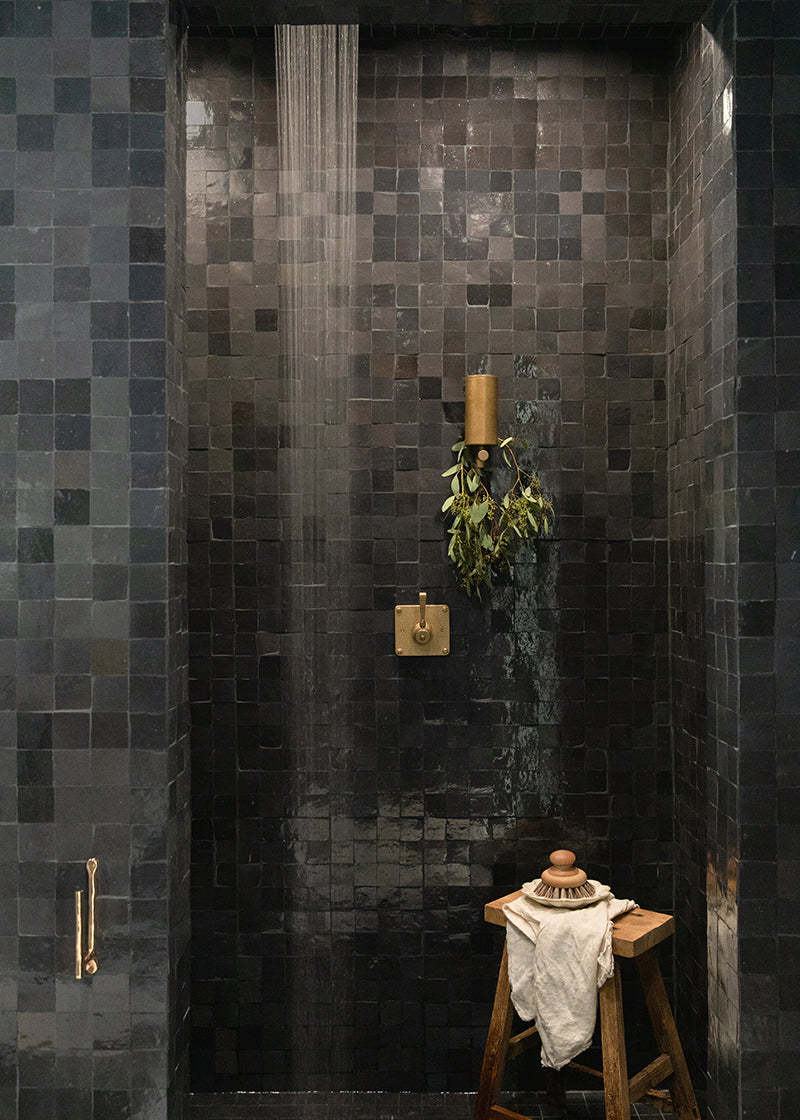
clé zellige 2x2" in battled armor. design: innen studios / photo: bess friday
the role of light in grout color selection
light changes everything. a grout color that looks perfect in a showroom can read completely differently in your shower. natural light, in particular, has a significant impact. a warm gray might take on a cooler tone in a north-facing space, while a darker grout can soften dramatically in bright, sunlit conditions.
artificial lighting adds another layer. warm bulbs can bring out yellow undertones, while cooler LEDs may emphasize blue or gray notes. this is why sampling is so important. viewing grout alongside your tile in the actual space allows you to see how the combination behaves throughout the day.
this, of course, is especially true with artisanal types of tile. their varied surfaces interact with light in complex ways, making grout color feel more dynamic. working with a professional to create mock-ups or sample boards can help you prevent costly surprises later.
why professional installation matters
when it comes to tile, design and installation are inseparable. you can choose the perfect tile and grout combination, but without proper execution, the final result won’t reflect that intention.
this is particularly true for artisan materials. grout joint width, application technique, and cleanup all influence how the grout lines appear. a skilled installer understands how to handle variation, how to maintain consistency, and how to ensure the grout enhances rather than detracts from the tile.
think of it this way: your (or your designer’s) role is to define the vision. your installer’s role is to bring it to life. choosing an experienced professional is not just a solid choice — it’s essential for achieving a result that feels refined and cohesive.
grout color: getting it right
grout color is one of the final, defining decisions in a shower design — and one of the most impactful. getting it right means understanding not just color but also material, light, and use.
the best grout color for showers isn’t a single answer. it’s the one that aligns with your tile, your space, and your priorities. whether you’re working with handcrafted zellige, patterned cement tile, or something from our ceramic tile collection, the relationship between tile and grout should feel intentional from the start.
if you’re still selecting tile, consider making both decisions together. exploring different colors, textures, and types of tile alongside grout samples will ensure a more cohesive result. and with the right pairing? grout doesn’t just support your design — it completes it.