
the history of blue and white tile and its place in modern design
by clé tile | published: Nov 30, 2025
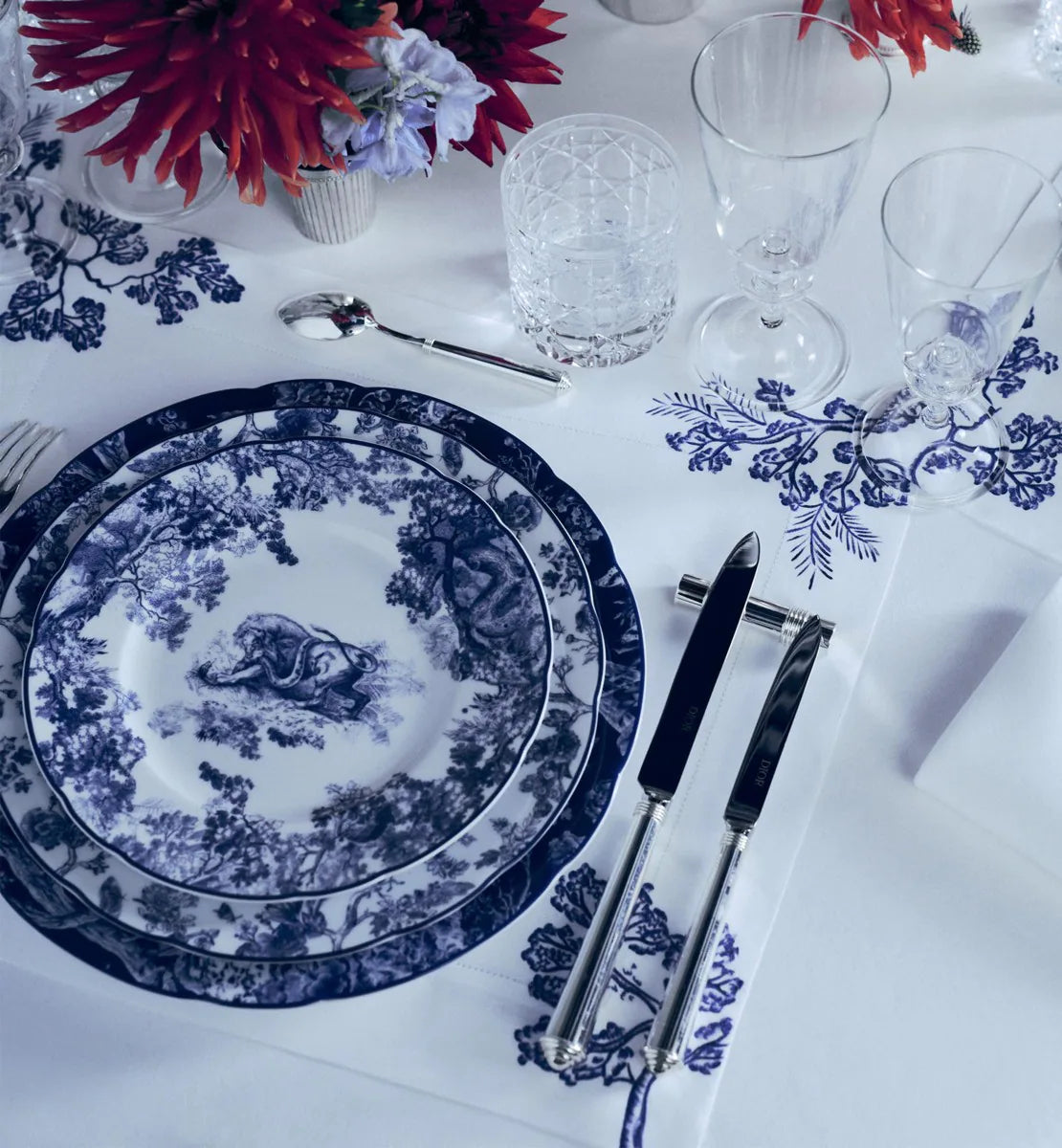
Dior Toile de Jouy place setting (source)
was there ever a more perfect — or long-lived match — as blue and white? it’s not just timeless, it’s beyond time, universal in geographic reach — and in spirit. as we developed our collection of blue and white tile — 17th century, maiolica de Delft — we delved into the aesthetic and cultural history of blue and white. so rich was it that we had to split it into two parts. read part one here.
by the 20th century, from Europe to the Americas, blue and white had become firmly ingrained in interior design as a signal of classic taste to be employed any time a nod to tradition (with a touch of nostalgia) was called for.


the origins of blue and white tile
to recap where we’ve been, cobalt blue became a defining element in Chinese porcelain and early tilework, setting the foundation for global influence.
chinese porcelain and the birth of cobalt blue
the story of blue and white tile begins with the luminous cobalt-glazed porcelain developed in China, where artisans first discovered that cobalt oxide could produce a brilliantly stable blue even under the intense heat of high-fired kilns.
during the Yuan dynasty, cobalt decoration became a signature artistic language — a way to create striking contrast, delicate linework, and enduring patterns. by the Ming dynasty, blue and white porcelain had evolved into a refined art form, celebrated for its fluid brushwork, symbolic motifs, and unmistakable depth of color.
this early mastery laid the groundwork for the blue and white designs that would eventually influence tile traditions around the world.
the spread through Persia, the Ottoman Empire, and Europe
as trade routes expanded, cobalt-blue ceramics traveled westward, inspiring new interpretations of the technique across Persia and the Ottoman Empire. Persian potters adapted the style into their own sophisticated tilework, blending Chinese influence with regional florals, geometry, and calligraphic elements. Ottoman artisans further transformed blue and white into a bold architectural statement, especially in iznik tiles, where the palette grew to include turquoise and soft reds.
by the time blue and white ceramics reached Europe — first through Middle Eastern trade, then through direct import from China — they ignited a creative exchange that shaped delftware, majolica, and later European porcelain. every region added its own flair, but the throughline remained the same: cobalt blue offered a rich, enduring pigment that allowed cultures to tell their own stories.
soon, textiles became an a major democratizing influence for blue and white in design. in France, toile de Jouy translated the blue and white motif (along with other colors) to fabric. cheaper and more broadly available thanks to strong domestic textile manufacturing, toile de Jouy began moving beyond classic Chinese motifs, depicting romantic, pastoral and rural scenes. It soon became a hallmark of classic French provincial design… and in time, toile de Jouy spread from more simple country French design back up to the aristocratic classes.

french toile de jouy pattern (source)

delftware and the rise of Dutch tilemaking
now, let’s look at Dutch tilemaking, in particular. (it had a major influence on the growing popularity of cobalt-blue and white tile in Europe.)
influence of Eastern craft on European styles
when Chinese blue and white porcelain reached europe in the 16th and 17th centuries, it quickly captivated artisans who had never seen such vivid cobalt hues or such refined brushwork. European potters — especially those in the Netherlands — began experimenting with similar techniques, adapting imported aesthetics to local materials and kiln practices.
the result was an emerging European interpretation of a centuries-old Eastern craft, one that blended global influence with regional artistry to create entirely new types of tile and decorative traditions. this exchange not only reinvented European ceramics but also cemented cobalt blue as a perfect choice for storytelling through pattern and palette.
legacy and cultural significance of delft blue
delftware soon became a defining hallmark of Dutch design, with its hand-painted motifs, pastoral scenes, and crisp blue detailing offering a fresh yet familiar take on the global blue and white lineage. these tiles were more than decoration — they reflected trade, cross-cultural dialogue, and a growing appreciation for artistry in everyday spaces.
today, delft blue remains an excellent choice for those who are drawn to handcrafted character, historic charm, and a variety of colors within the blue palette itself. for those who love this timeless look, clé’s collection of classic blue and white tiles offers a way to bring that same handcrafted spirit into the bathroom or kitchen.


blue and white tile in other global traditions
whether a result of cultural exchange or no, this color pairing has emerged across a wide variety of different cultures. meaning: it’s a color combo with universal appeal.
Portuguese azulejos and Spanish influence
in Portugal and Spain, blue and white tilework took on a bold, expressive identity all its own. while the tradition was shaped in part by earlier Islamic craftsmanship and imported ceramics, Iberian artisans developed a distinctly local style defined by sweeping patterns, narrative panels, and architectural scale. Portuguese azulejos in particular became one of the best choices for transforming entire façades, cloisters, and interiors into immersive works of art.
Islamic and Middle Eastern blue tilework
across the Islamic world, blue and white tilework blossomed into a sophisticated art form rich with geometry, symmetry, and spiritual symbolism. artisans in Persia, central Asia, and the broader Middle East used cobalt blue to anchor complex patterns, calligraphic scripts, and star-filled mosaics that adorned mosques, madrasas, and palace walls. the cool, luminous blue offered both aesthetic harmony and cultural meaning, making it a perfect choice for spaces meant to evoke peace, beauty, and reverence.

shibori, indigo dyed textiles (source)


why blue and white endures in design
centuries later, more humble forms of blue and white also proved to be among the most powerful unifiers of “high” and “low.”
cheap and accessible, indigo dye was commonly used throughout the world to create resist-dyed textiles like shibori. inexpensive, these blue and white fabrics were often associated with the working class. in Japan, for example, mending techniques like aizome, sashiko and boro traditionally used indigo-dyed textiles and white cotton thread, which were both inexpensive and readily available.
but as contemporary designers began to incorporate traditional Japanese wabi-sabi design principles and motifs into their projects (inspired by Japanese fashion designers such as Junya Watanabe who’d long incorporated these techniques), boro began to find their way into upscale homes.
timeless color theory and emotional impact
then there are the psychological aspects of this color combination to consider. blue and white remains an excellent choice because it strikes a rare balance: it’s both calming and striking, familiar and fresh. wherever it lands, it brings an innate sense of clarity and harmony — blue evokes depth, serenity, and trust, while white provides contrast and lightness.
versatility across design styles and eras
part of the magic of blue and white is its ability to adapt. it’s a solid choice whether you’re crafting a traditional, coastal, minimalist, or modern space, and it moves seamlessly between different colors, materials, and types of tile. from classic delft motifs to sleek geometric cement, the palette works with nearly any aesthetic language, allowing it to bridge eras and styles with ease.

k5 tokyo hotel designed by Claesson Koivisto Rune (source)


bringing blue and white tile into today’s interiors
blue and white tile continues to shine in modern spaces, offering endless ways to weave handcrafted beauty and timeless contrast into your home.
kitchens that honor tradition while embracing modernity
blue and white tile can bring a kitchen to life, whether you lean into classic motifs or prefer a more contemporary edge. a coastal kitchen backsplash can serve as a striking focal point, grounding the room in history while still feeling fresh. or, for something softer, a field of tonal zellige adds a gentle layer of texture and sheen — the perfect choice for homeowners seeking a blend of tradition and modern clarity.
for those drawn to handcrafted detail, clé’s zellige and 17th-century collections offer a variety of colors and types of tile that echo the charm of historical blue and white while staying firmly rooted in today’s design aesthetic.
bath and spa spaces that feel timeless yet elevated
in bathrooms, blue and white tiles naturally lend themselves to serenity. think: hand-painted tiles that wrap a shower or pale sky-blue zellige paired with fresh white walls. this palette remains an excellent choice for creating a sense of clarity and openness. layered patterns — from gentle waves to geometric repeats — can add just enough visual interest without overwhelming the eye.
unexpected applications: fireplaces, floors, and architectural features
for those ready to go beyond the expected, blue and white tile can transform unexpected corners of the home into works of art. a fireplace surround clad in patterned tile becomes an instant centerpiece, while a cobalt-and-white floor brings depth and contrast to an entryway or sunroom.
even architectural features — stair risers, built-in niches, or outdoor thresholds — can become standout design moments. this is also an ideal opportunity to draw inspiration by color, where modern interpretations of blue and white spark new ideas for bringing this enduring palette into your home.


choosing the right blue and white tile for your space
here’s how to make informed, expert-aligned decisions for your own space.
material considerations: ceramic, zellige, porcelain, and beyond
selecting the right material will ensure your blue and white tile looks beautiful — and performs beautifully — in your home. glazed ceramic and terracotta offer a smooth, consistent surface ideal for crisp patterns, while zellige brings handcrafted texture, tonal depth, and the kind of variation that makes every installation feel one of a kind. porcelain, known for its strength and low-maintenance finish, is a perfect choice for high-traffic areas and flooring.
understanding artisanal characteristics: variation, texture, and tone
handcrafted tiles come with natural variation in color, texture, and surface finish, all of which contribute to their charm. blue and white palettes can shift subtly from tile to tile, creating movement and dimension that machine-made products simply can’t replicate. embracing these artisanal traits is the best choice for homeowners who want their space to feel layered and lived-in rather than uniform.
professional installation tips for handcrafted tile
installing artisan tile requires patience, precision, and an understanding of how handcrafted materials behave. slight size differences, uneven edges, and natural variation mean that expert setting, spacing, and layout planning are essential. a skilled installer will know how to showcase the beauty of blue and white tiles while accounting for these characteristics, ensuring your project looks intentional rather than irregular.

blue and white: an enduring color palette
from renaissance palaces to laid-back interiors, high brow or low brow, blue and white is a chromatic classic that will never go out of style. it has traveled centuries and continents, gathering meaning, technique, and beauty from every culture it’s touched. and today, it remains an excellent choice for homeowners seeking timeless design with handcrafted character, whether it finds its way to a blue kitchen backsplash or a coastal inspired shower. whatever your design aesthetic, this palette offers versatility, emotional resonance, and a variety of hues across many different types of tile.
find your blue and white