
14 floor tile patterns, explained: layouts that work for every room
by clé tile | published: Feb 13, 2026
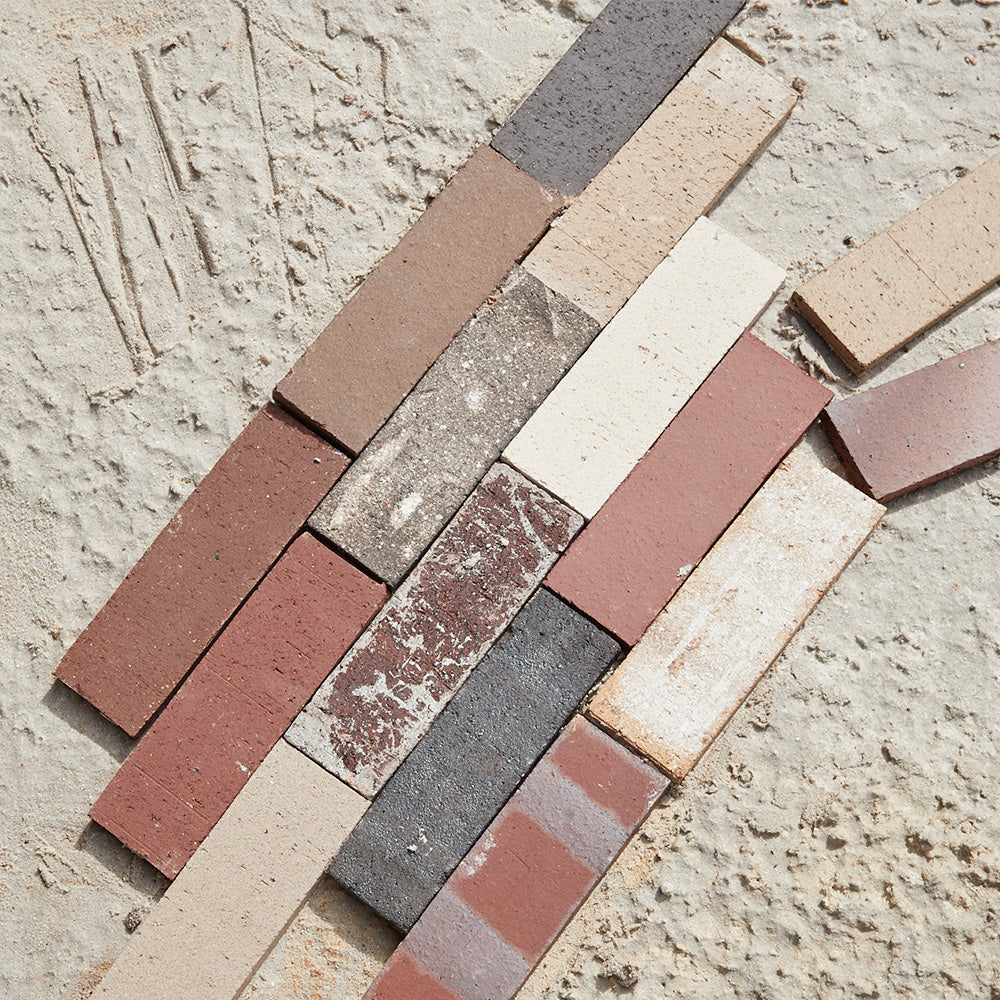
foundry flats collection
if you’re searching for floor tile pattern ideas, you’re in the right place. the way tile is arranged can completely change how a space looks and feels—even when using a simple material. floor tile patterns refer to the layout or configuration in which tiles are set, from straightforward grids to more intricate designs that add movement and visual structure. just as important as the tile itself, the layout influences scale, flow, and how the room is perceived.
let's stroll across both classic and modern floor tile layout patterns, including options that work best with specific tile sizes, so you can choose a design that enhances your space rather than just filling it.
in every case, make sure you’re working with an experienced tile installer who has successfully worked with the tile you’re using and lays out your installation in advance, carefully blending the tile color variation for your desired effect.
don’t forget grout, either, which can amplify — or bring more subtlety to — your pattern. make sure the installer provides you with ample grout boards so you can see the effects of grout color, size, and even lighting on your pattern.
note that many of these tile layout patterns can be approximated with patterned tile — less traditional, but often a somewhat more straightforward option!

14 stunning tile patterns to inspire you
grid
the grid is one of the simplest—yet most versatile—floor tile layout patterns. using square tiles aligned at all four corners, this straight-set installation creates a clean, orderly look that feels intuitive and timeless. because of its clarity, it’s often the baseline pattern homeowners and designers use to evaluate other, more complex floor tile patterns.
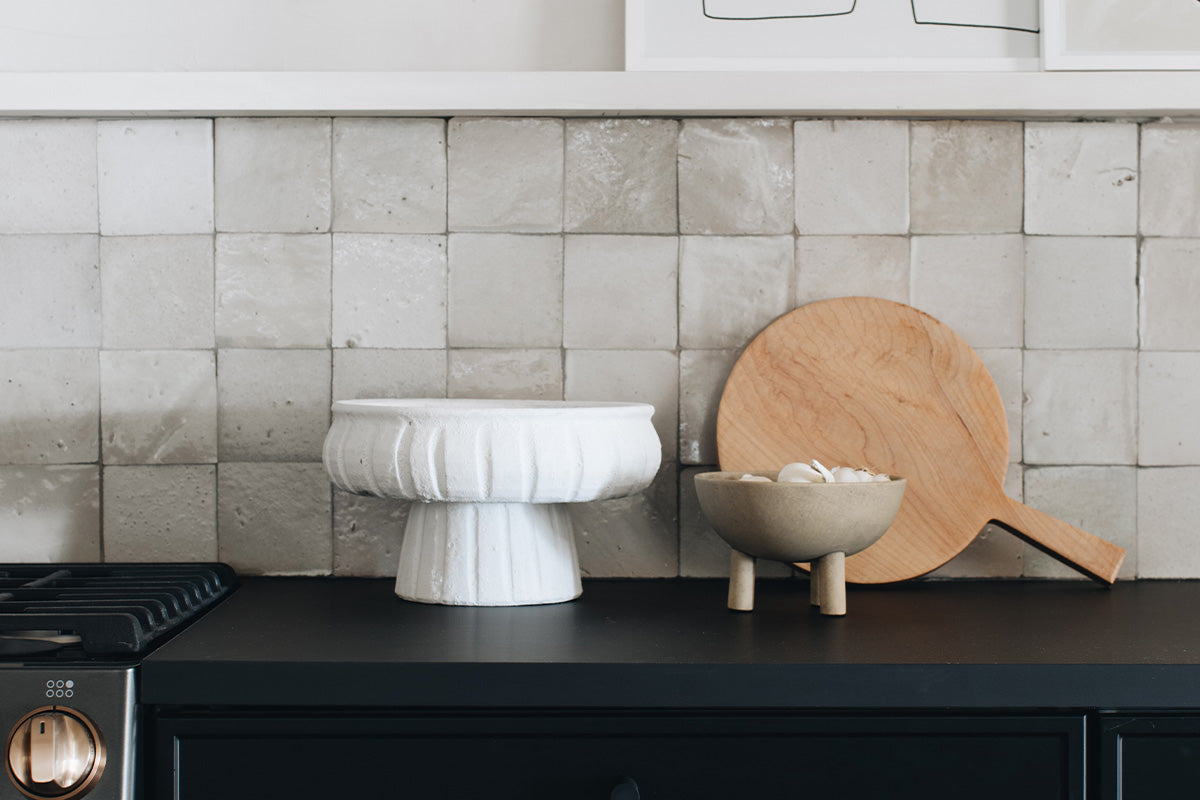
eastern elements rice paper 4x4. design: sarah sherman samuel / photo: stoffer photography interiors
this layout is especially well-suited to square floor tile patterns, where the proportions reinforce the symmetry of the grid. it also translates beautifully to 24x24 floor tile patterns, where large-format tiles create a more expansive, architectural feel with fewer grout lines. in large, open areas, grids emphasize scale and calm continuity; in smaller rooms, they provide structure without visual clutter.
though straightforward, the grid allows for a surprising amount of variation through tile color, surface design, and size—changing even one element can dramatically shift the outcome. grout choice plays a role, too: high-contrast grout highlights the geometry, while a matching grout color softens the pattern into a more seamless surface.
you could play with scale for an entirely different look: compare and contrast the effect clé white thassos in a petite (4x4”) creates versus an oversized square (24x24”) on this floor tile layout.
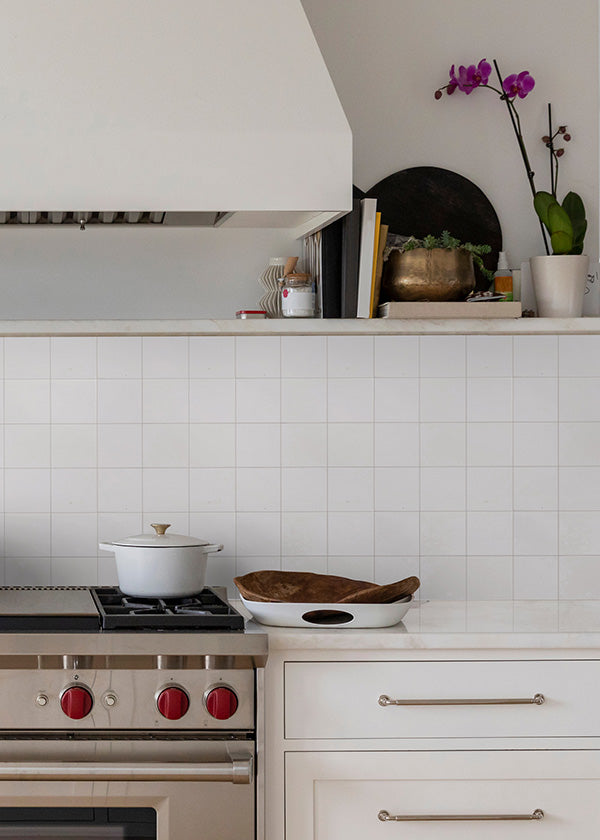
clé thassos 4x4 square
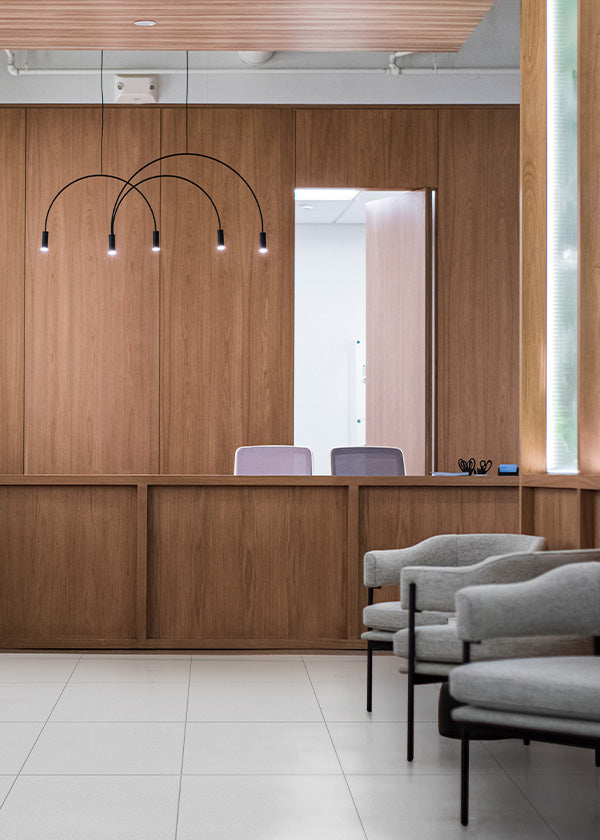
clé thassos counter square
or swap out your zellige pixie (2” x 2”) for the same in a new color, for a completely different look — even in kitchens with similar shelving and overall styles.
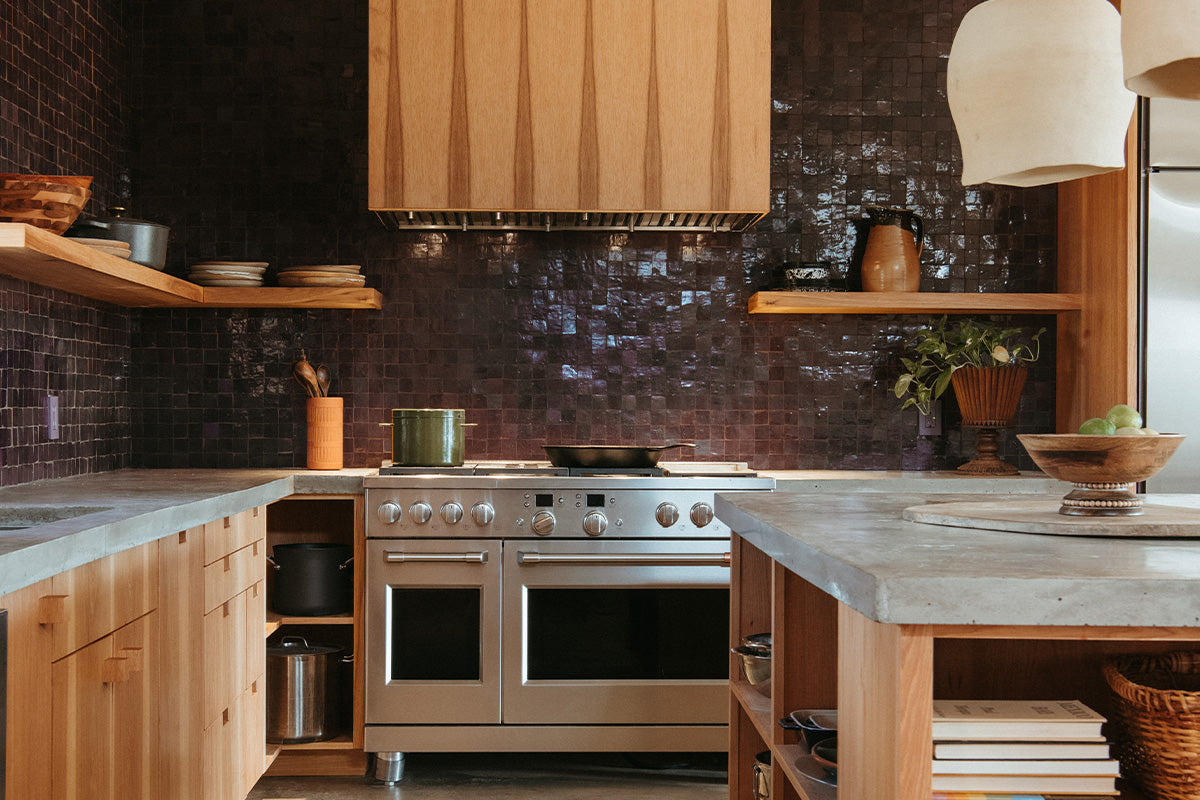
zellige 2x2 in midnight port. design: willow house / photo: michelle nash
grid: classic checkerboard
you can alternate color on a grid for a perennial clé favorite, the checkerboard. check out cinema collection: mythology for infinite checkerboard inspiration. checkerboards work well in a range of dimensions from large, 24 x 24 floor tile patterns to smaller options, all the way down to 2 x 2.
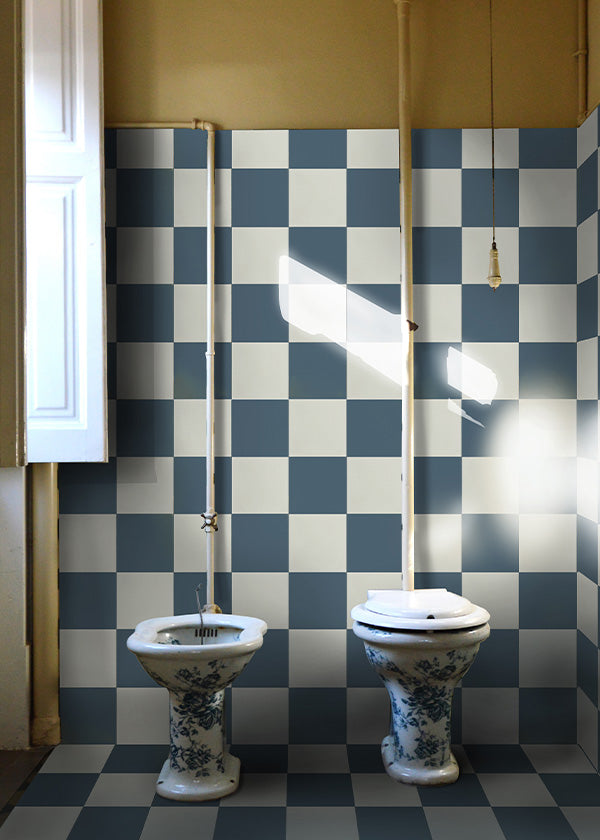
cinema collection: mythology cement flanders duo in mallard + paste
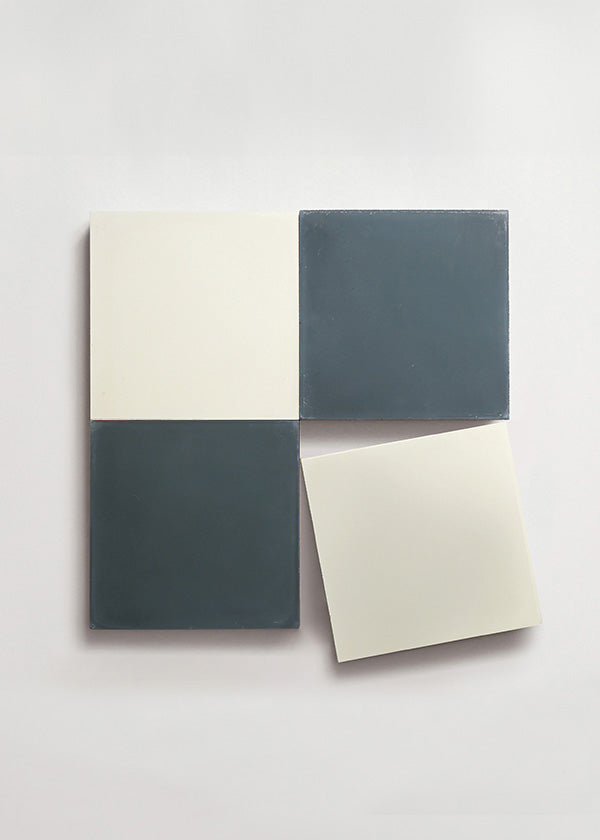
cinema collection: mythology cement flanders duo in mallard + paste
grid: broken checkerboard
alternatively, keep the basic structure of a grid and break the grid of the checkerboard with the colors.
to extend the possibilities of the grid even further, use patterned tile: even when it’s laid out in a simple grid, the pattern on the tile can create a completely different look.
the same basic structure, but with a whole lot of color and pattern.
secondary patterns can be created by changing just one element of a tile within the grid, like color, finish, texture, or direction of installation. (it’s especially fun to play around with the bold patterns on our cement tiles.)
with a simple turn of a patterned tile (and this category includes dimensional, 3d, sculptural, or relief tile), you can create a multitude of layout pattern options. and that’s all while staying within the grid pattern.
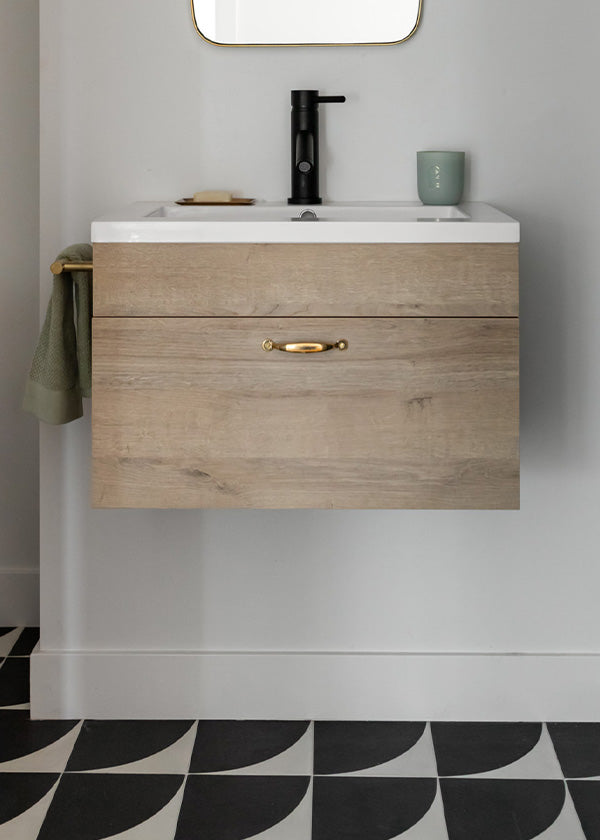
cement arc in black + white. design: abbie naber design / photo: laurelwood creative
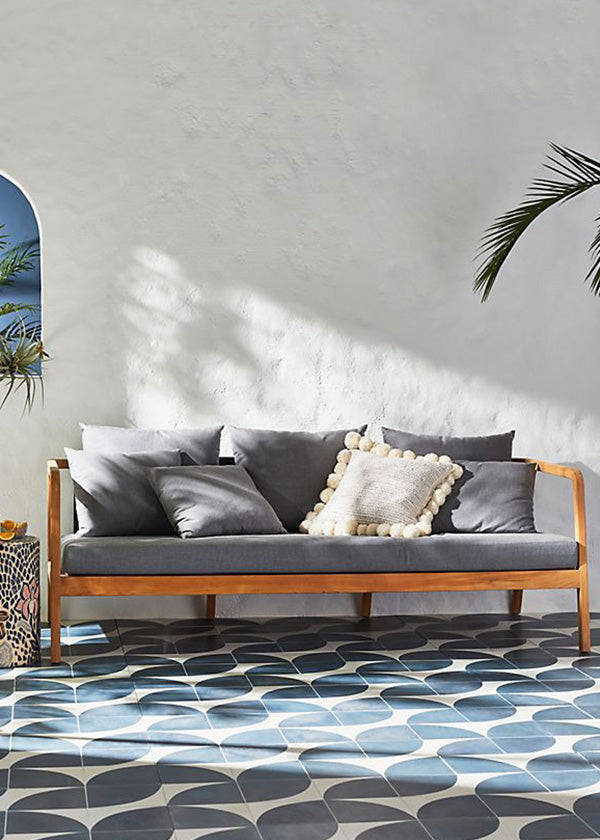
cement arc in federal blue + white. design/photo: anthropologie
grid: diamond
a diamond pattern is the classic grid layout, rotated on a 45-degree angle to the walls of the room for a more dynamic look.
because the lines run diagonally, the eye is drawn across the space rather than straight ahead, which can make rooms feel larger and more open. this pattern works with a range of sizes—larger square tiles create a bold, spacious effect, while smaller formats introduce more movement and detail underfoot.
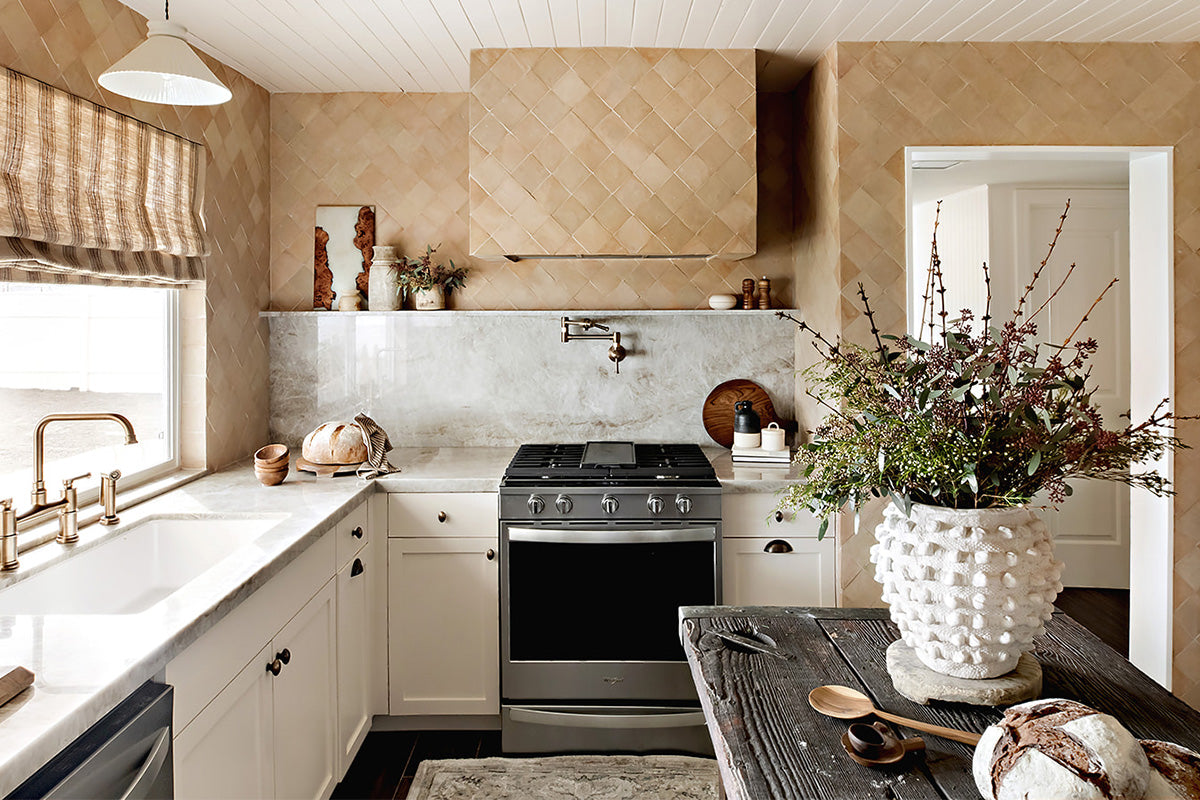
zellige 4x4 in natural. design: house of g designs / photo: public 311 photography
grid: non-square
a related pattern is a grid-like layout of non-square tiles, such as 12 x 24 floor tile patterns. they introduce a sense of direction and rhythm that square formats can’t achieve, guiding how the eye moves through a space differently. their varied proportions create natural visual tension and balance, making the approach feel more architecturally expressive.
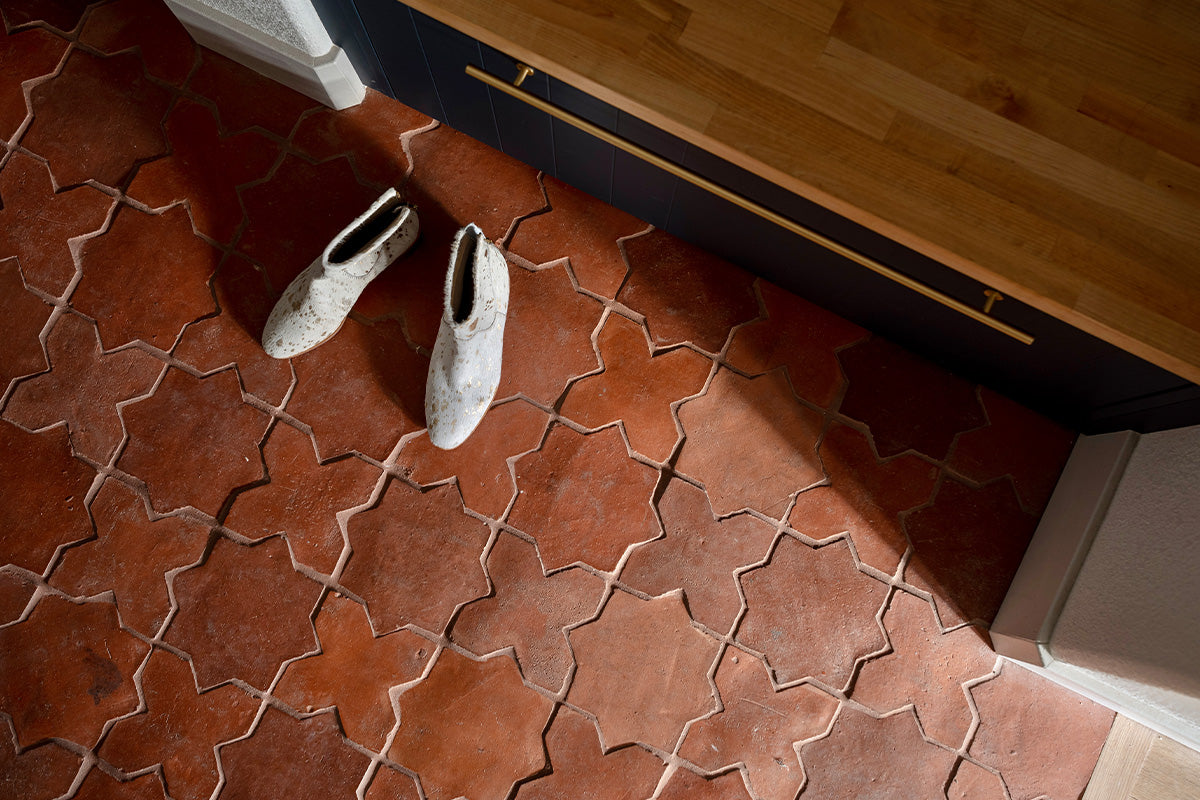
belgian reproduction star + cross in flemish red. design: celine ord / photo: nick sorrentino
stacked
the stacked pattern places rectangular tiles in a clean, aligned layout where joints meet evenly, creating a sense of order and rhythm rather than directional movement. it’s a common approach for 12x24 floor tile patterns, where the elongated format highlights the tile’s proportions without introducing offset. when used in a vertical orientation, the uninterrupted lines feel especially crisp and architectural, which is why stacked layouts are often associated with more contemporary interiors.
may we offer you a baguette (2” x 6”), cigar (2” x 8”), or blade (3” x 12”)?

zellige 2x6 in Weathered white. design: becki owens / photo: rebekah westover
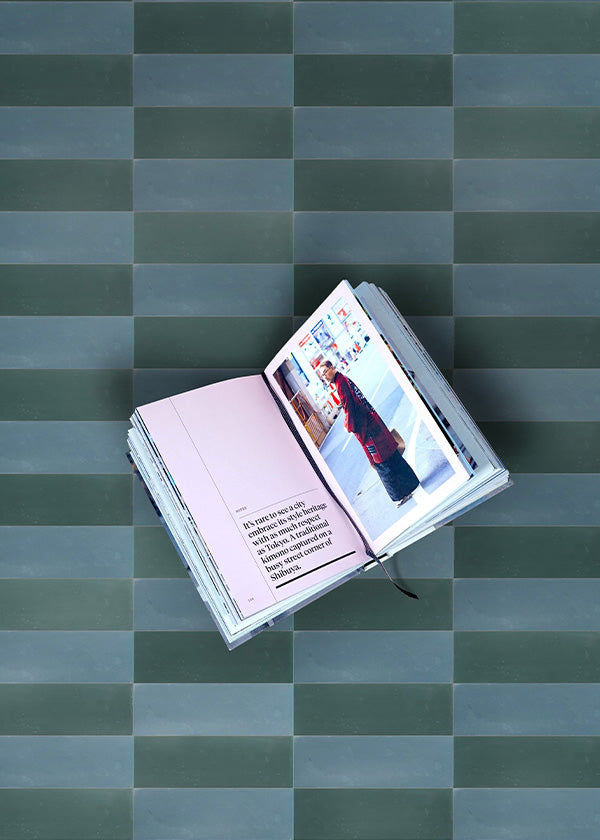
cinema collection: mythology wildwood baguette duo in mallard + forest
horizontal stacked
the horizontal stacked arrangement creates long horizontal lines which can help a space feel wider, or visually tie spaces together, as the eye follows the lines.
color, finish, and on-tile pattern can create stripes and other designs within the stacked pattern.
vertical stacked
a vertical stacked pattern is somewhat less common, and feels a bit more modern. the long vertical lines can make a space feel taller, or emphasize the height of an already lofty space.
although a similar color, the fluted surface and narrower format of tiles in clé’s lapidary sculpted shapes collection adds an extra emphasis to the verticality of this pattern.
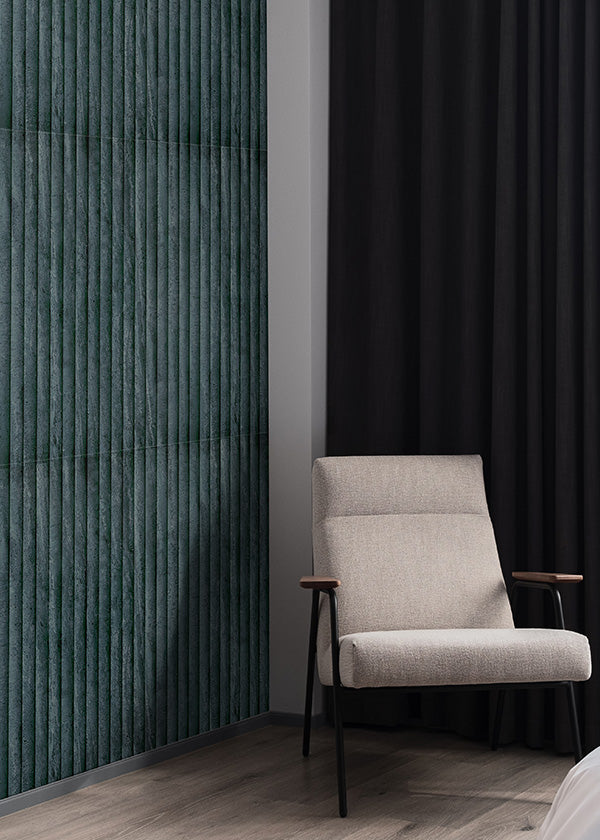
lapidary etui grand in verde marble
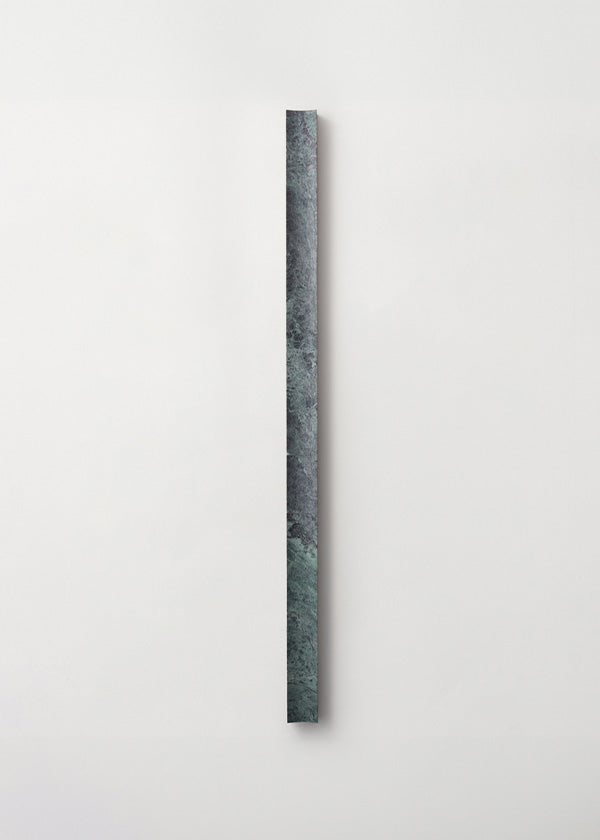
lapidary etui grand in verde marble
here color creates a unique, dynamic pattern within a vertical stacked layout pattern.
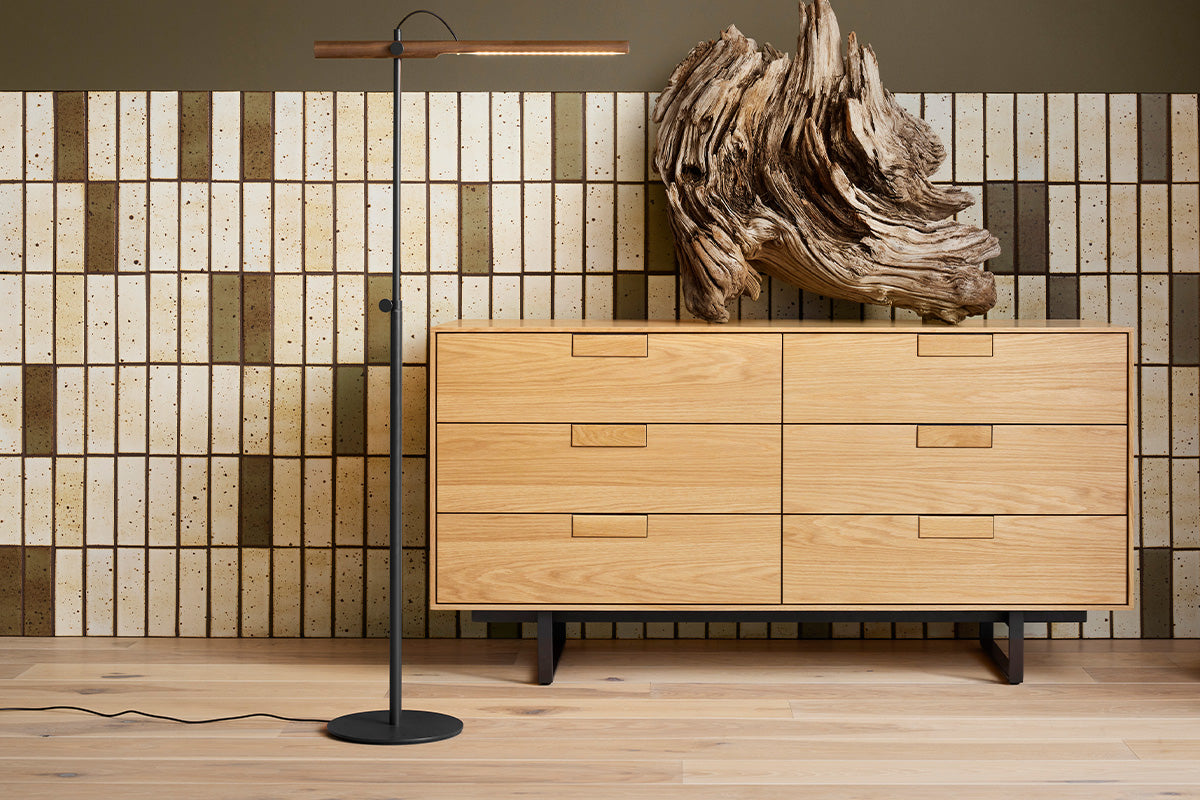
clé guild new california brick in yarrow and bracken. design / photo: bludot
offset or staggered
whether installed vertically or horizontally, this is the most common pattern of all. if you’re taking note of tiles in the wild, you’ll see this one again and again.
as such, it goes by many names: running bond, offset, staggered, brick pattern or subway pattern. whatever you decide to call it (we’re partial to “running bond”), the tiles are staggered in alternating rows with the end of each in the middle of the tile above and below it.
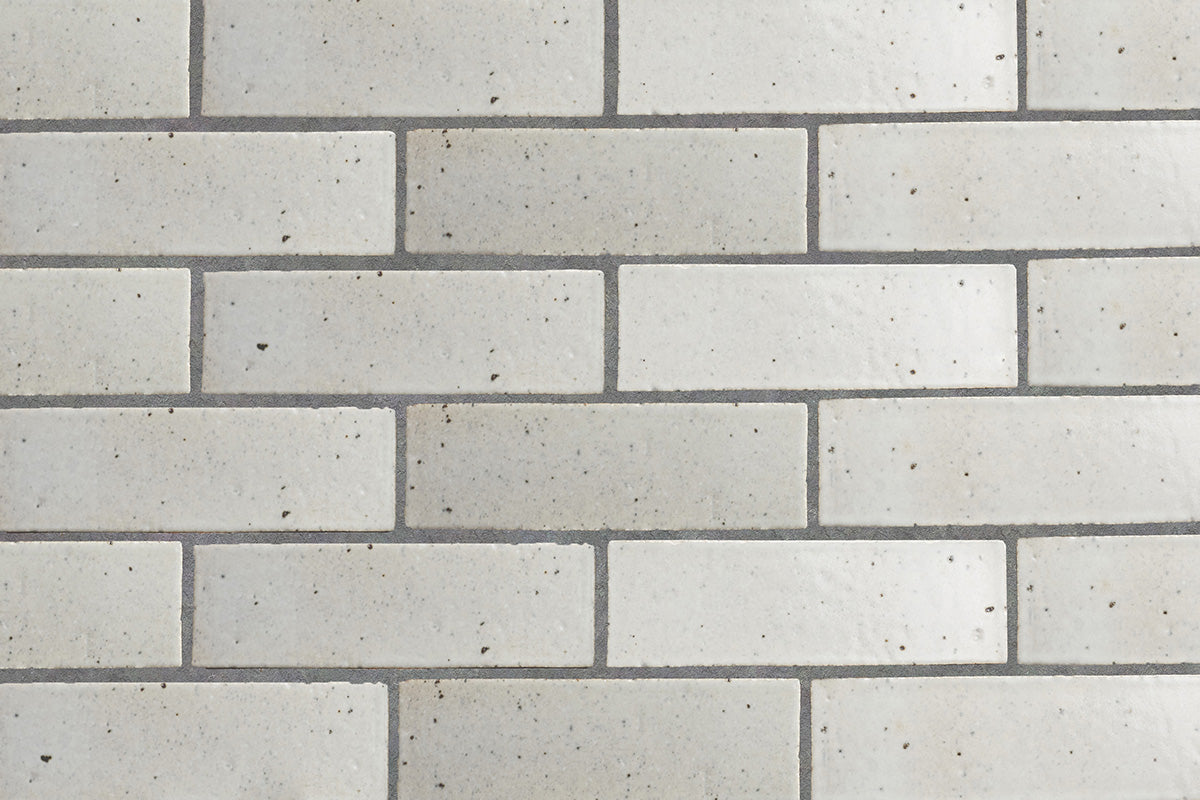
clé guild new california brick in mallow
with running bond, scale and finish can have a huge impact on the final look.
a running bond pattern can also be used with color or pattern to create new patterns.

cinema collection wildwood grand trio in army, roan + charcoal
vertical off-set stacked, with varied widths
clé offers numerous bundles and blueprints for mixing tile sizes into a dynamic, unexpected pattern. these include our moroccan le sol terracotta and our fornace brioni + clé casale rustico tiles.
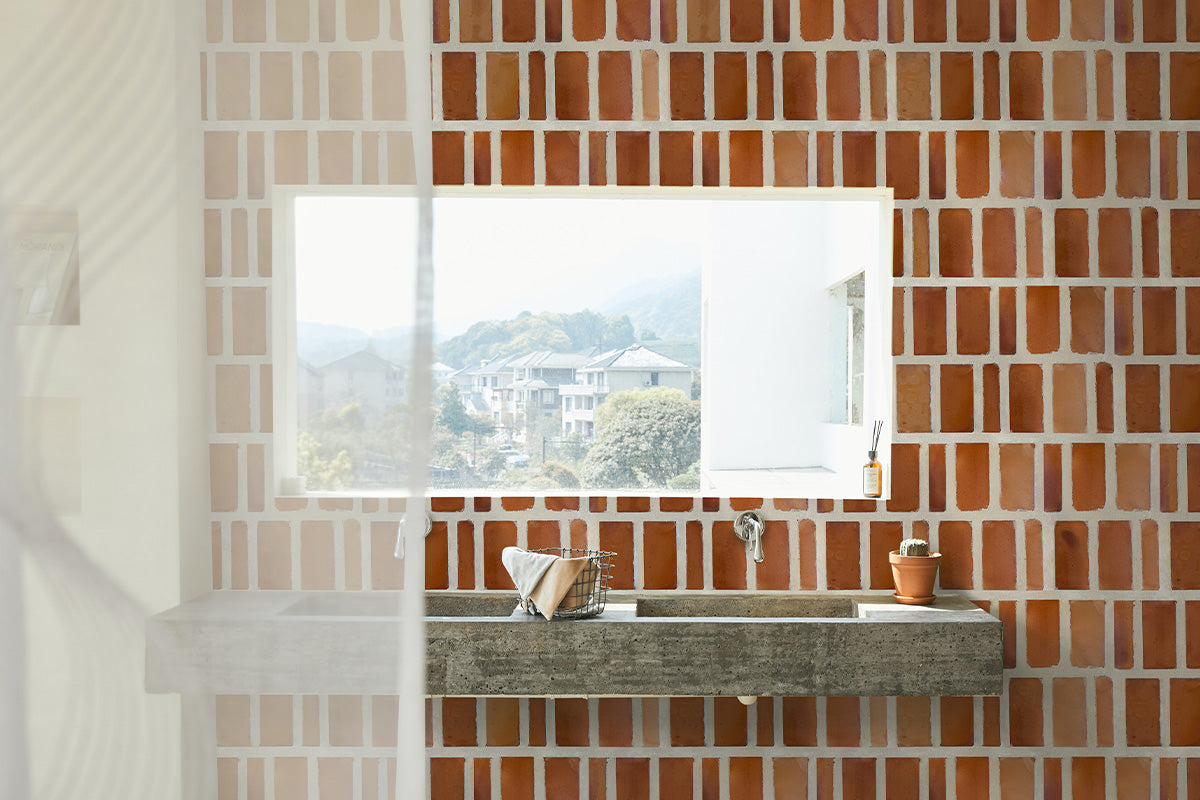
le sol grand plank + rectangle
diagonal
a diagonal pattern is a grid, stacked, or running bond layout that is arranged at an angle across a space. since the longest continual line runs corner to corner, this pattern can make a room feel larger because we naturally perceive more space when following those extended lines—making it especially effective in smaller rooms. it also pairs well with 24x24 floor tile patterns, where the larger format keeps the look open rather than busy.
the introduction of angled lines (instead of following the direction of walls or floor joints) adds energy and movement, which works well in areas that benefit from a sense of activation or expansiveness. it’s also a smart solution for borders, such as for a kitchen tile to wood floor transition, helping the shift between materials feel intentional.
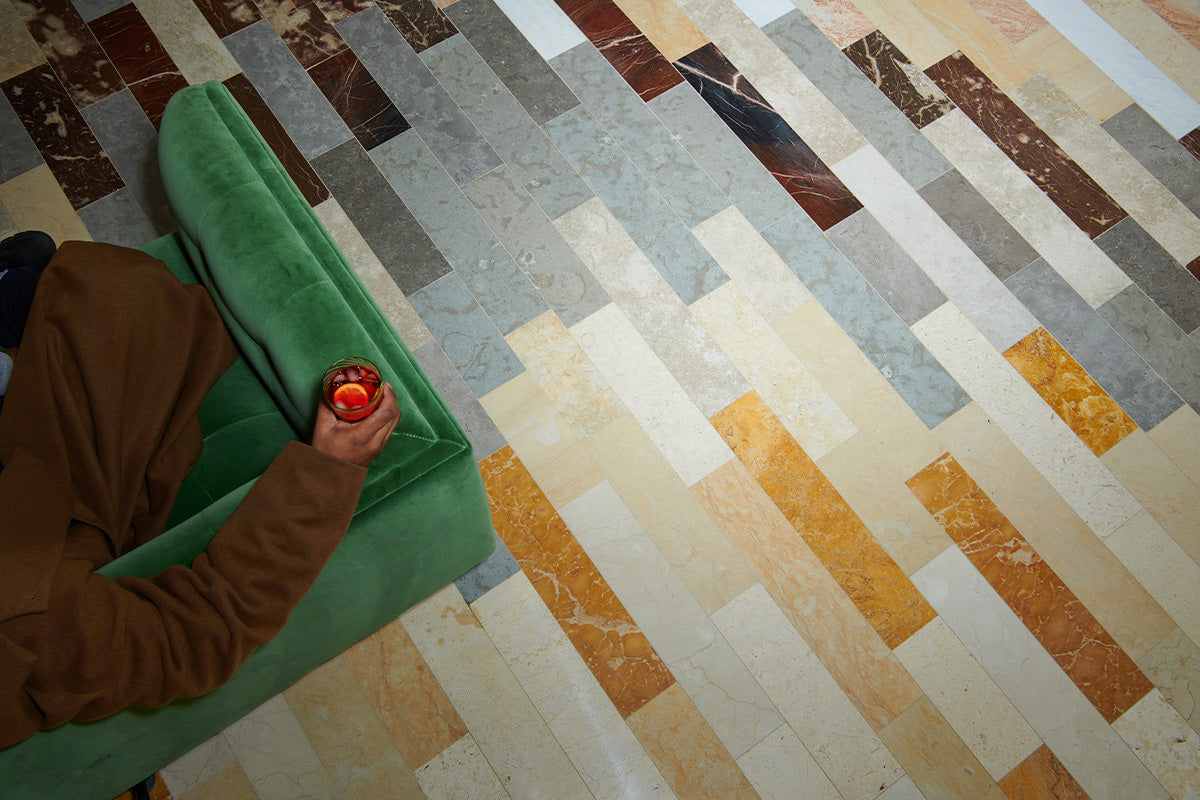
strata linea five inch plank
herringbone
a herringbone pattern is made up of rectangular tiles laid at 45 degrees that meet at straight edges to form a zigzag pattern.
the only cuts needed for this pattern are edges and trim, similar to a stacked pattern. the angle of the herringbone will always be 90 degrees, as one straight edge is placed against the other.
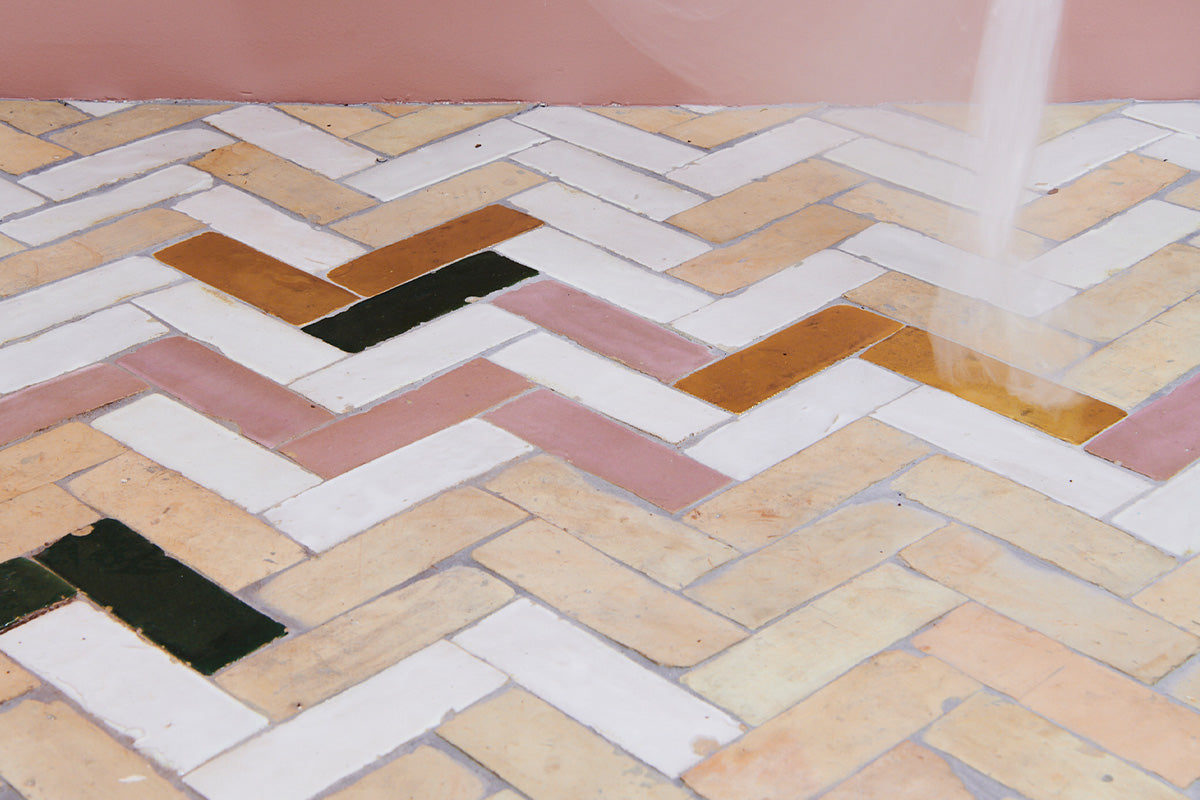
zellige essaouira lustre blend
the herringbone pattern adds a great deal of visual interest to a space while remaining classic: tiles have been found arranged in the herringbone pattern as far back as the roman empire. (and if we’re talking textiles or jewelry, the design goes back much farther to ancient egypt.)
herringbone is more decorative than stacked or running bond, but it can range from bold to quite subtle depending on the tile used.
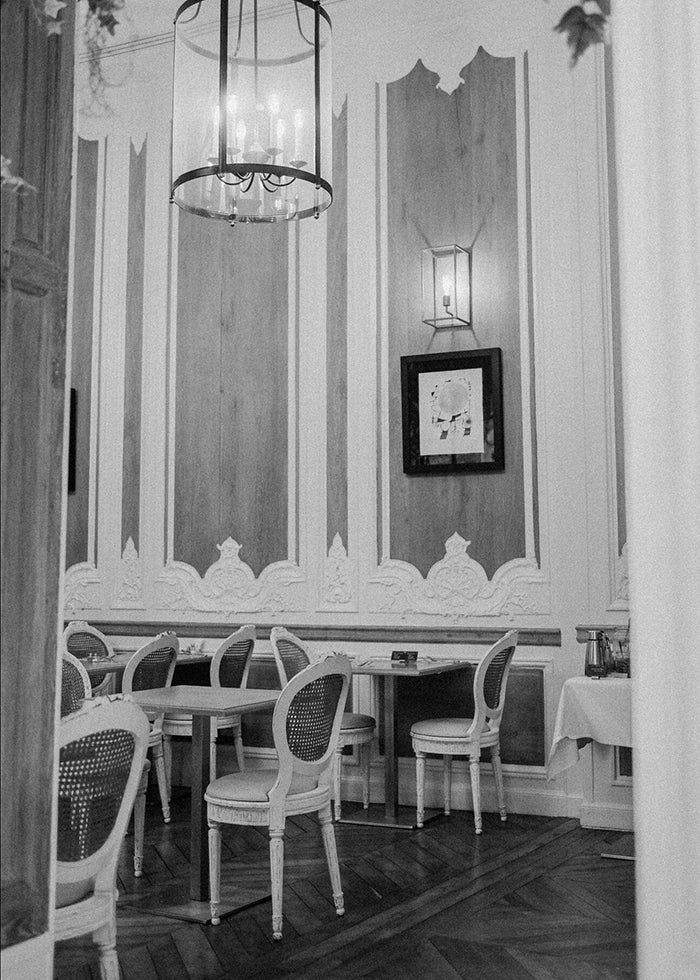
the classic chevron pattern
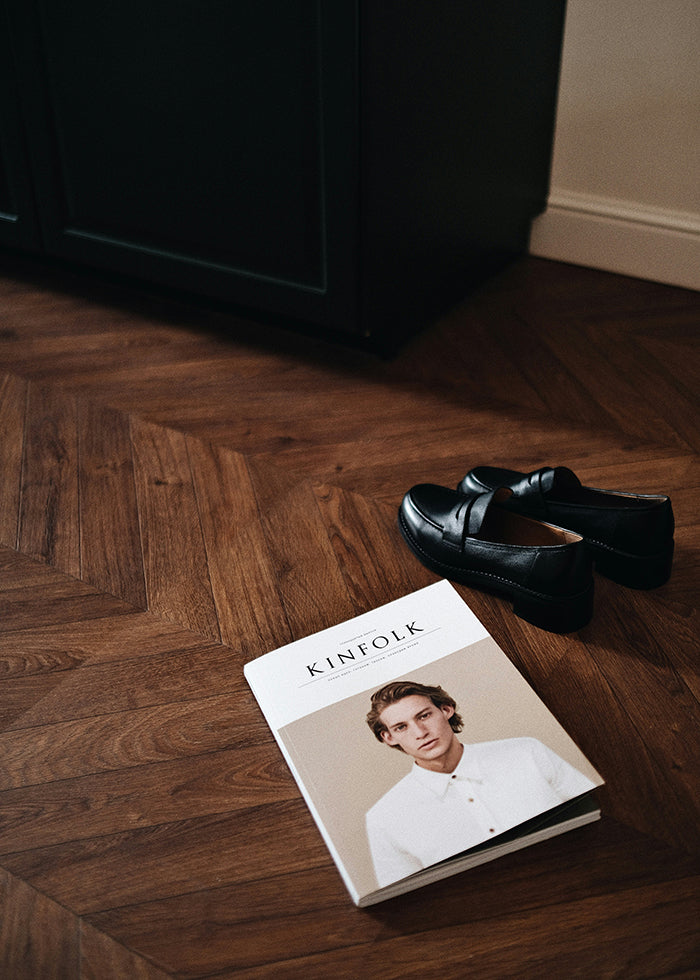
Image courtesy of max ans
chevron
not be confused with herringbone, tiles in a chevron pattern have their edges cut to meet flush with the next pattern, instead of overlapping. the effect is somewhat similar, but with unbroken long grout lines.
the herringbone tile layout is generally more common, as the chevron pattern requires a considerable amount more contractor work and waste if starting with rectangular tiles, as each tile must be cut twice at an angle.
if you’re looking for a chevron effect, but with a touch more drama and a great deal less work (and waste), we recommend our zenith tile from the cement standards collection, which has an additional benefit: it can be laid out in a myriad of ways. an even more dramatic alternative would be marrakech terrace, also from our cement standards collection.
mosaic
mosaics are composed of many small pieces of tile, stone, glass, or other materials assembled to form a continuous pattern. while the technique dates back to ancient civilizations, today it’s valued less for pictorial storytelling and more for the texture and intricacy that come from its smaller scale and higher pattern density.
because of that scale, mosaics are often best suited to floors in compact areas—like bathrooms, entries, or shower pans—where the added grout lines improve traction and the detail can be appreciated up close. on walls, they function as focused moments or feature zones rather than expansive surfaces, bringing layered visual interest without overwhelming the space.
for a less traditional, more modern mosaic look, but with slightly larger form factor, our exclusive zio & sons + clé collaboration features classic octagon bouchon-shaped zellige tiles in a wide range of bundles that range from tone-on-tone to high contrast.

clé x zio and sons zellige in charred cedar octagon + sea salt bouchon
basketweave
basketweave is an ancient pattern with numerous variations.
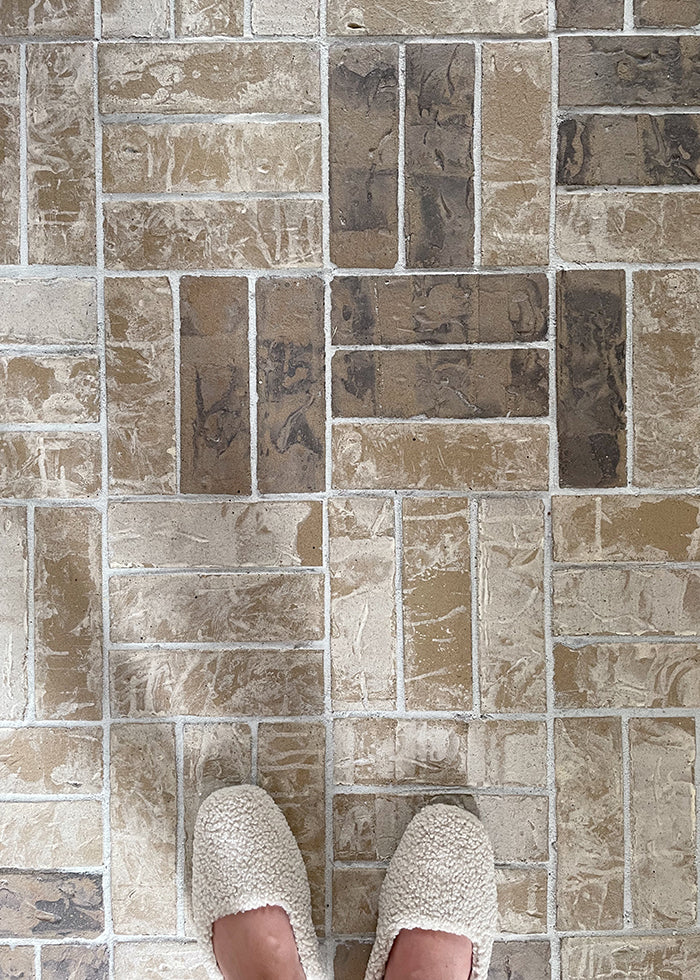
Foundry flats forge alloy flux. Photo: Our House West
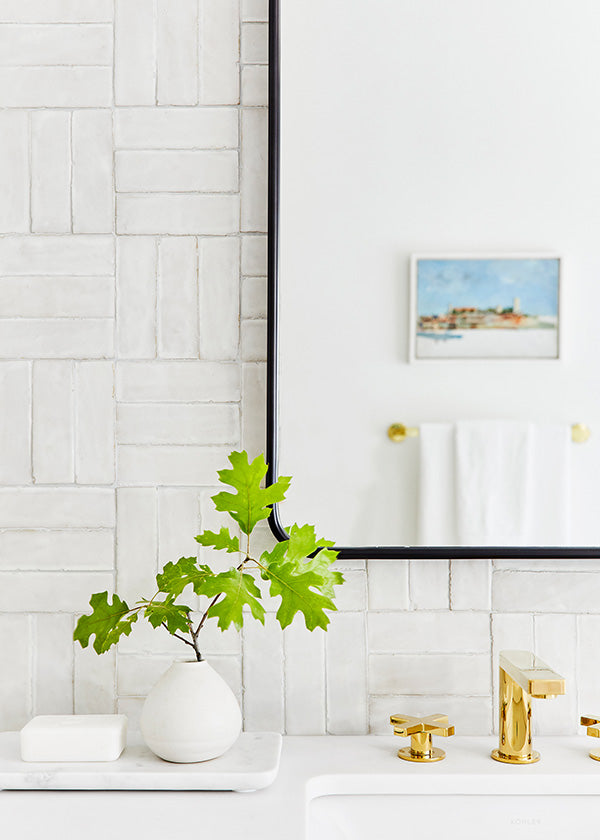
zellige 2x6 in weathered white. design: emily henderson / photo: sara tramp
this version of the traditional basketweave pattern is created when sets of tiles are laid perpendicularly at right angles. each set alternates between vertical and horizontal installations. then, the direction of the sets of tile alternate in the next row.
another common pattern is also referred to as "basketweave": a mix of rectangular and square tiles that mimic a woven pattern, which you might recognize from vintage bathrooms. we might consider this collaboration with cristina celestino to be the definitive clé basketweave #2.
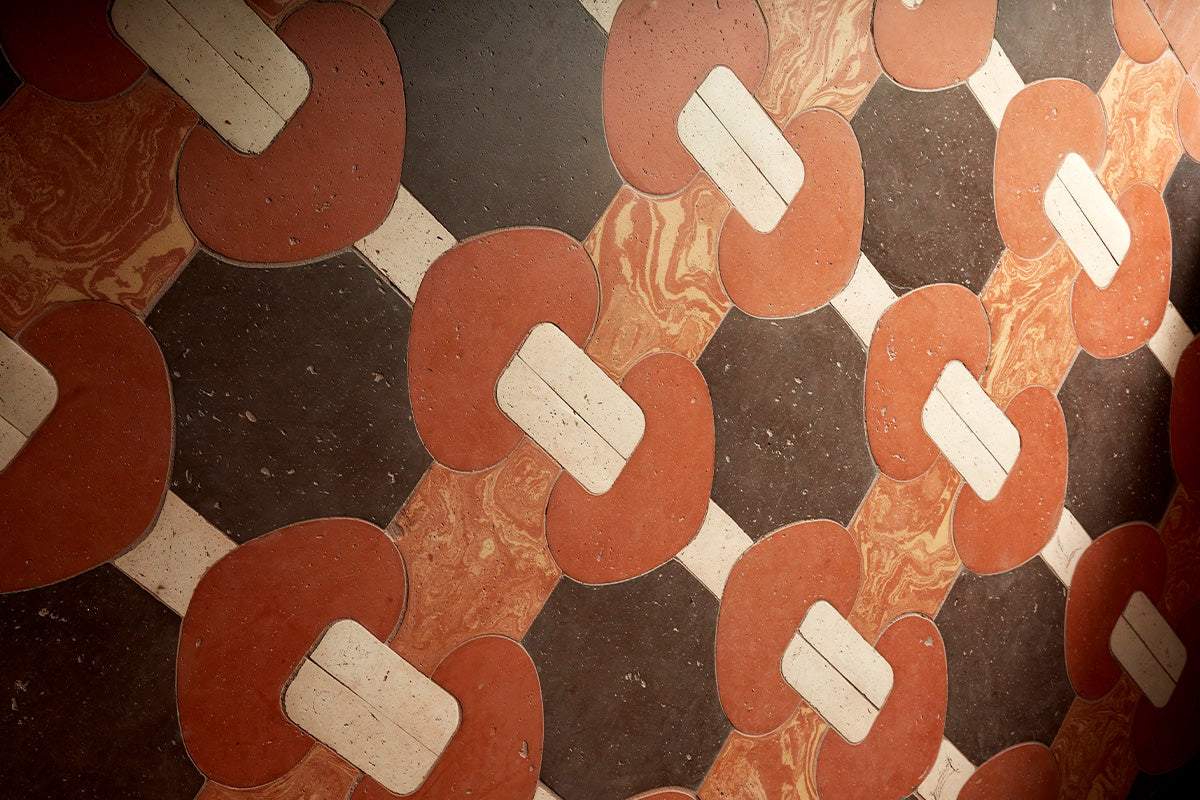
fornace brioni + cristina celestino capriccio bundle
lacework
you may come across the term “lacework” in tile layout literature but it does not have a standard definition. while not ideal for visually busy spaces, lacework patterns work well as statement areas. we think of it as tile used to create a more intricate design that approximates lace.
this effect can be achieved in a variety of ways, from the use of patterned tile to more imaginative layouts.
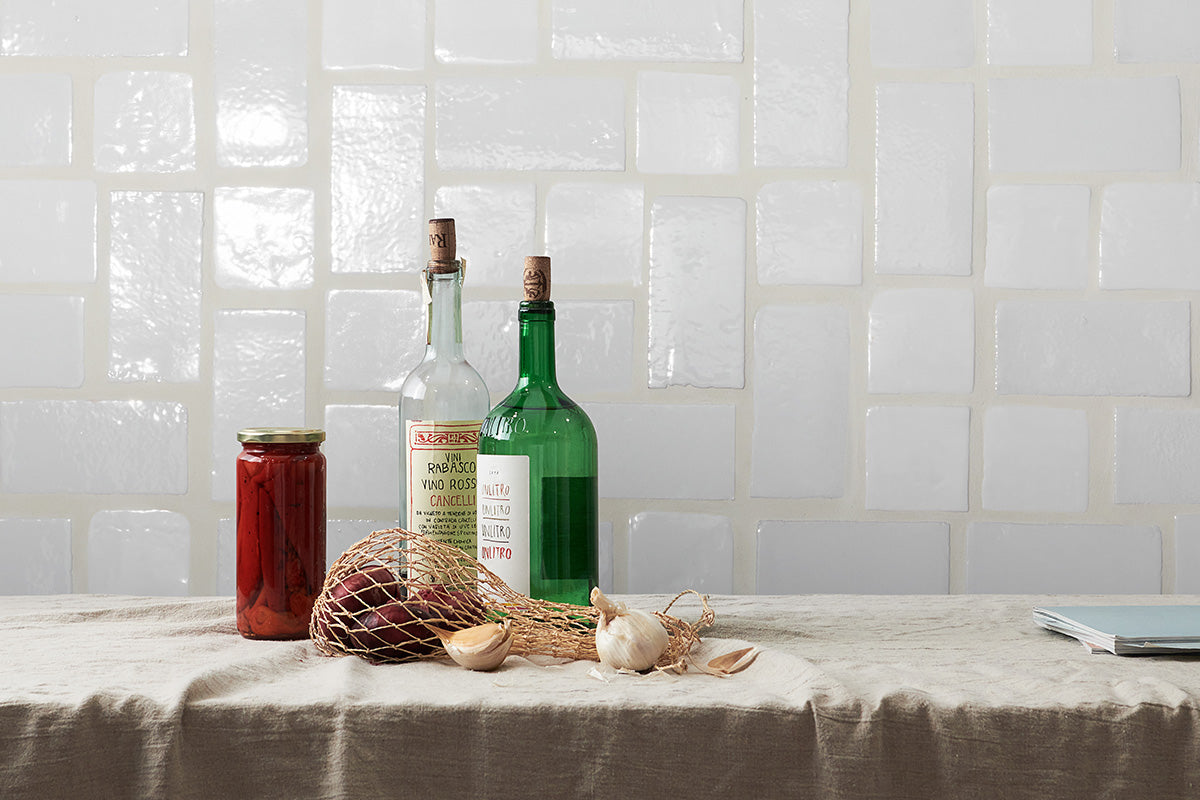
fornace brioni + clé casale rustico misto bundle
casale rustico from fornace brioni + clé, offers two pattern bundles in normale and misto (employing different size tiles for a striking effect) to give a lacework effect. a more matte, urban version of this look is also available in cement tile.
patterned tile options are another way to create a more intricate look, including those from our cement standards collection (particularly moroccan, circles and curves, hexagons, traditionals, and zig zags). for a more elevated and even more organic look, explore our collaborations with artists such as erica tanov and eskayel.
in addition, the classic blue and white look from our 17th century maiolica de celft collection offers the intricacy of lace.
creating pattern from tile is a matter of thoughtful, more intricate layout achievable with clé’s exclusive bundles, and the intentional use of grout as a part of the pattern. and for the ultimate lacework effect, look to clé granny squares.
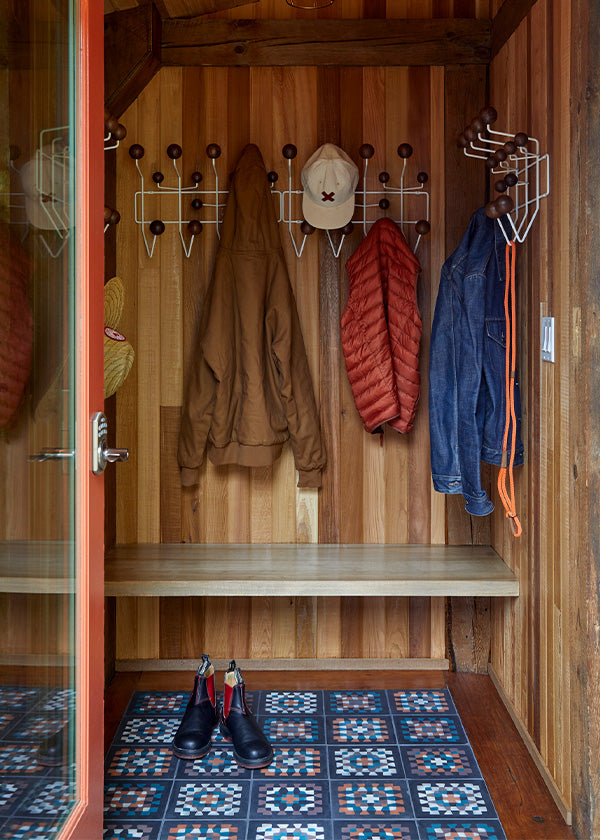
cement granny square in black. design: kent collection / photo: aaron limoges
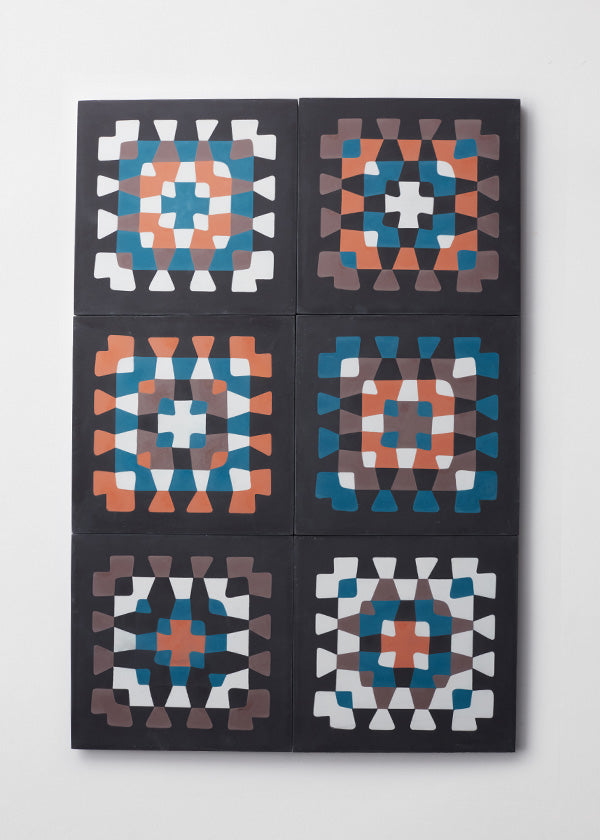
cement granny square in black
grid pattern with border
adding borders can be a way to add definition, interest, and character to the classic grid. it can set off a space, “frame” an area or a grouping of tile, or even create a dado effect.
in our 17th century maiolica de delft collection, for example, borders offset the classic square blue and white tiles, creating an elegant separation between different types of tile for more of a maximalist effect.
windmill
windmill is another broad-based term that refers to any tile effect that recalls the blades of a windmill or the spokes of a bicycle wheel. it is often characterized by a central point from which tiles radiate outward.
this effect can also be created (more simply) with our cement tile patterns such as cubicon slant, xtra credit, and checkered past.
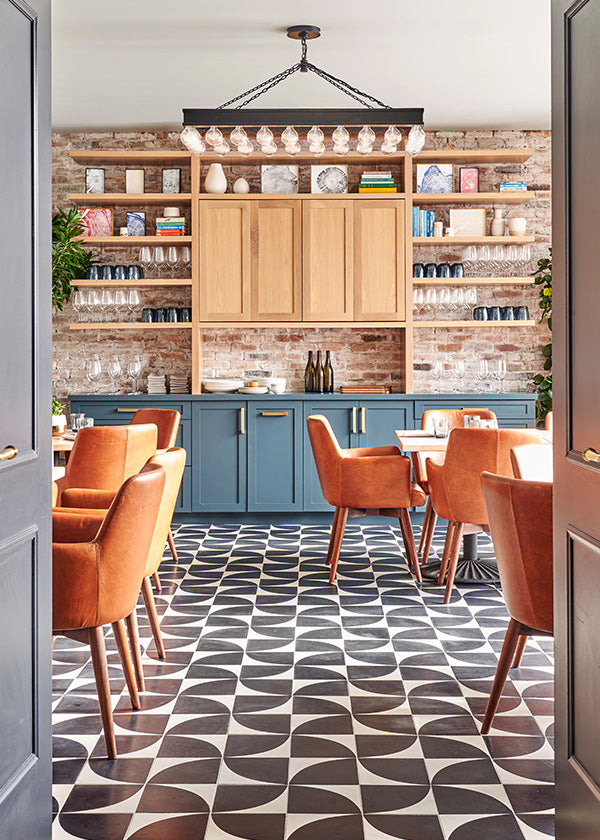
cement arc in black + white. design: leah elizabeth ogden / photo: mikey schwartz
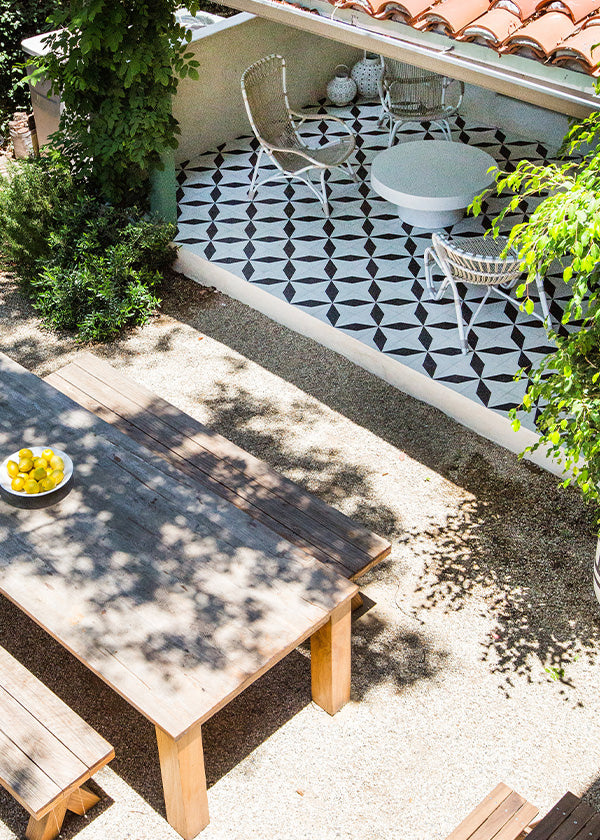
cement xtra credit in black + white. design: jenna cooper / photo: tessa neustadt
pinwheel
pinwheel (closely related to windmill) typically refers to a geometric pattern revolving around a contrasting smaller square tile.
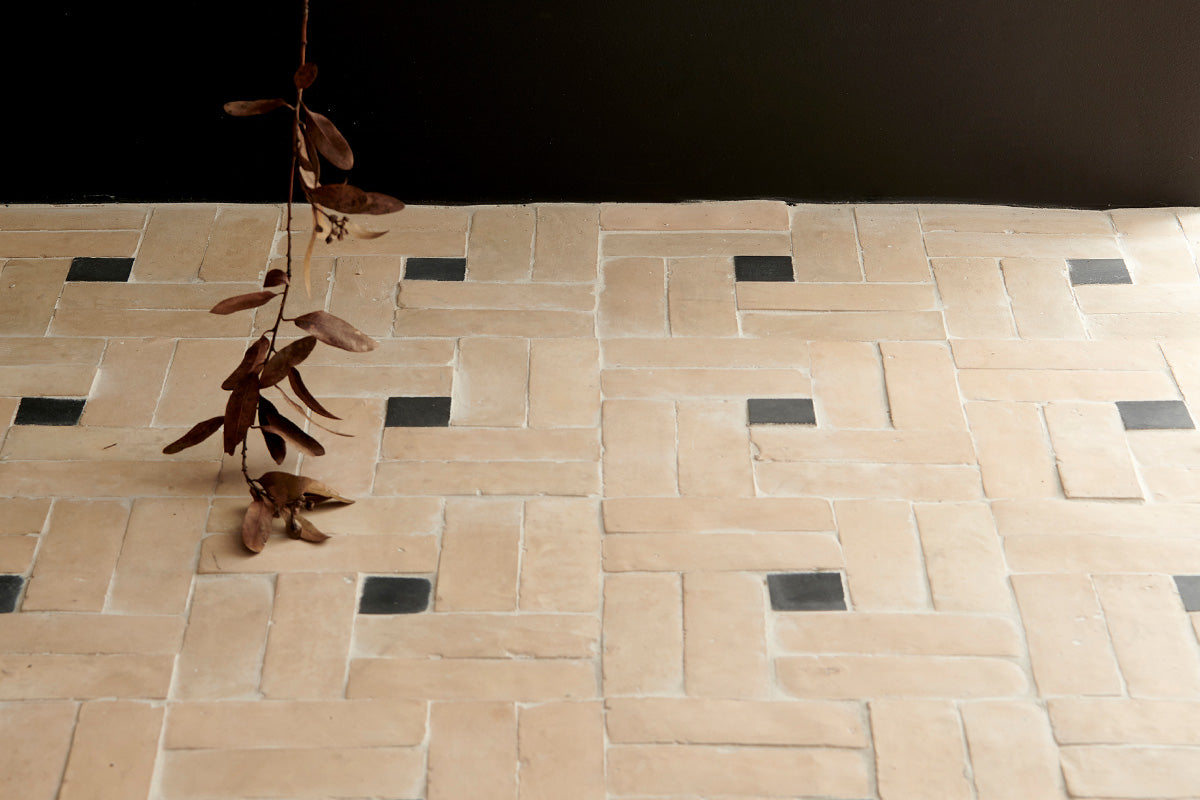
zellige 2x6 in natural and charred cedar bouchon
versailles
a versaille pattern is built of square and rectangular tiles, and it adds a little more interest than a grid while remaining traditional. you’ll commonly see it with simpler tiles, since its layout is already more complicated.

slate modernist mosaic bundle. design: babb + mack design / photo: dave bryce
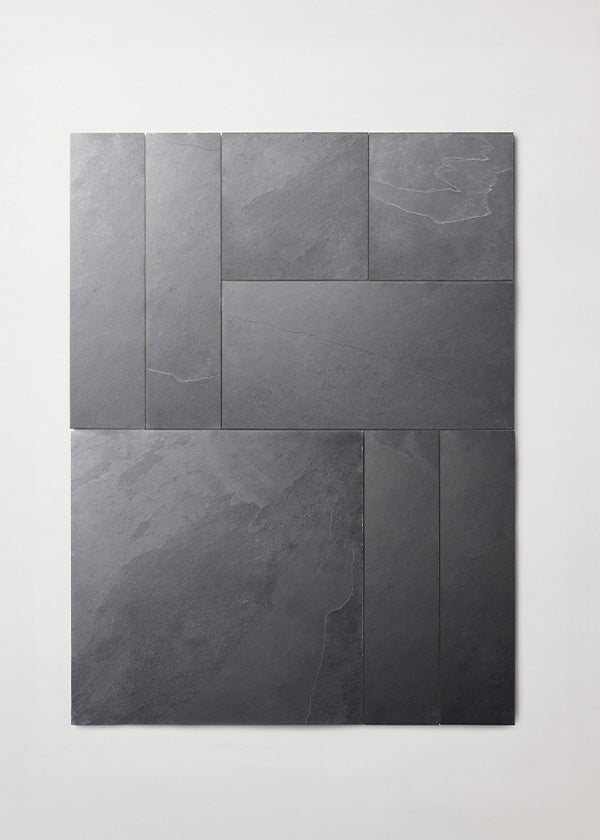
slate modernist mosaic bundle
tips for mixing and matching floor tile patterns
as always, we recommend working with your interior designer to mix and match floor tile patterns! there are few “rules” (except to use tile, of course).
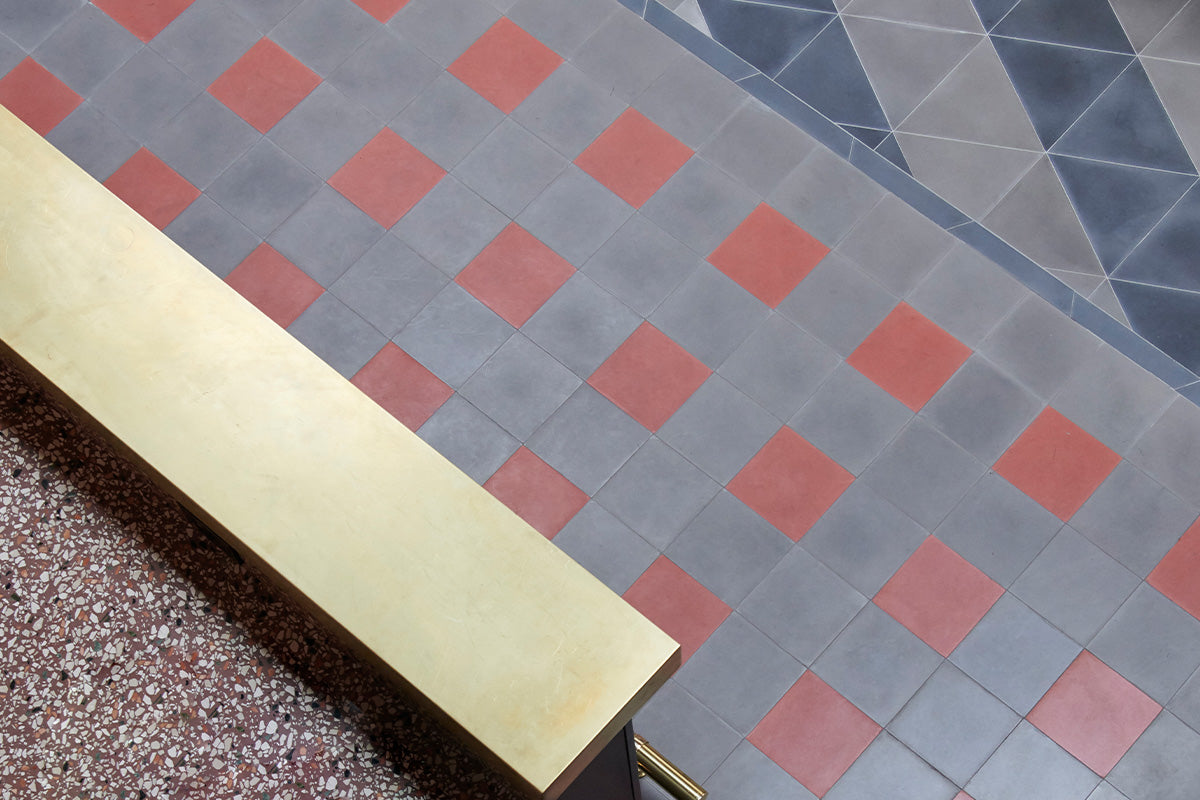
cement 8x8 squares in metal and barn
here’s what to consider:
- how will you use the space? that will dictate what tile you can use. from there, it’s up to you and your designer. what works as a living room tile won’t necessarily work in a bathroom. always refer to the usage information and material guidelines available on every product page.
- consider the spaces immediately next to the room you’re looking at and how they will flow together or juxtapose.
- color: do you want a serene space or a more vibrant, dynamic one? do you want to color block, or keep things more uniform? that will dictate your color choices. when in doubt (and even if not) consider using cement tile from the mythology collection, which comes in artist-designed palettes centered on color stories. choose two or more palettes from a single color story, and (as long as you’re not mixing up the different palettes) you can use the different tile palettes in different patterns in contiguous spaces.
- you might think that you need to stick to a specific style (classic or minimalist) but if your tastes and personal preferences run to eclectic, why not mix it up?
- keep in mind your walls: what’s on them: are they or will they be patterned or neutral? and will you be putting rugs over the floors?
- our cardinal rule holds here too: make sure you do a dry run to see if you like your layout before you actually undertake the installation.
the choice, as always is yours!

fornace brioni + cristina celestino variegato tavella, cement 8x8 square in metal and barn, strata linea 4 inch plank
choosing tile layout patterns for specific rooms
again, we recommend working with your interior designer because (again) there are no rules!
the only one is to make sure that the tile you’re using for your layout pattern is a tile that can be used in that space. always refer to the usage information and material guidelines available on every product page.
one rule in particular we think you can consider breaking is using smaller patterns for smaller spaces. we don’t believe that the size of a space should dictate what pattern you use.