Skip to content

Your shopping cart is empty.

the clé stone library

introducing the lapidary collection

materials

slate

slate begins as clay-rich sediment deposited on ancient sea or lake beds. over millions of years, heat and directional pressure shift its microscopic minerals into parallel layers, giving slate its distinctive ability to cleave cleanly into thin, smooth sheets.

the origin of slate colors

grey and black slate gets its color from ancient organic matter trapped in the original sediment. preserved carbon and minerals, such as iron sulfides, gave the slate its characteristic gray-black color.

signature character

the defining characteristic is cleavage — the ability to be split into thin, flat, consistent sheets. no other natural stone does this as reliably. the surface texture ranges from satiny-smooth on freshly split faces to increasingly rough as weathering opens the crystal structure.

slate is also one of the hardest flooring stones; its compressed, fine-grained structure makes it highly resistant to scratching and extremely low in porosity.

the first writing surfaces

~3000 bc

some of the earliest known uses of slate were as writing surfaces. its smooth cleavage plane and resistance to moisture made it an ideal substrate for marking and erasing. fun fact: the school chalkboard is a direct descendant.

slate has been shaped by human hands for five thousand years, long before polishing or processing was possible. its usefulness came entirely from its nature: a stone that splits evenly, resists water and lasts. that same character still defines it today.

medieval europe

1800s

welsh and cornish slate becomes the dominant roofing material across northern europe — splitting thin enough to shed water but strong enough to last centuries. in fact, villages in wales still have slate roofs made from stone quarried in the 1500s.

welsh slate & the industrial age

1800s
the welsh slate industry, at its peak, supplied roofing material for much of the industrializing world. penrhyn quarry — the largest slate quarry ever — is still visible from space as a terraced mountain cut.

slate, rediscovered

20th century

as roofing, slate declined with cheaper alternatives. however, designers rediscovered it as a floor and wall material. its matte, split-faced texture and deep range — from charcoal to green to plum — made it a counterpoint to polished marble.

slate floors became a mark of arts & crafts and mid-century interiors that prized the honest expression of materials.

today — clé

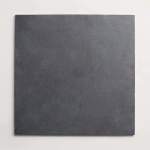
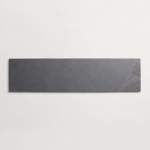
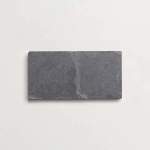
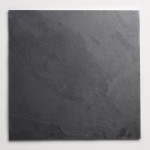
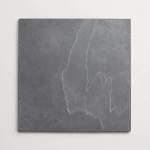
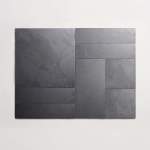
slate is the only stone tile that comes pre-finished by nature — its split face is the quarry face, requiring no cutting or polishing to reveal its character. clé's slate tiles carry that geological honesty: each surface is a cross-section of 400-million-year-old compressed seabed, split open for the first time.